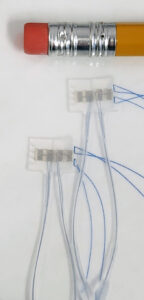
The Human Fusions Institute at Case Western Reserve University has pioneered the creation of prosthetic devices that have transformed the lives of those who have experienced limb loss. These devices have enabled individuals to hold and feel the touch of a loved one’s hand for the first time after losing their limb. Now, a dedicated group of HFI researchers, led by Assistant Professor Emily Graczyk, is collaborating with esteemed clinicians and scientists at the University of Chicago on a new frontier in sensory neuroprostheses. They are developing an implantable device that could potentially restore the sense of touch and reduce chronic pain for breast cancer patients who have undergone mastectomies. After more than a year of planning, designing electrodes, and testing their approach, the first implant was performed on the first participant in late May 2025.
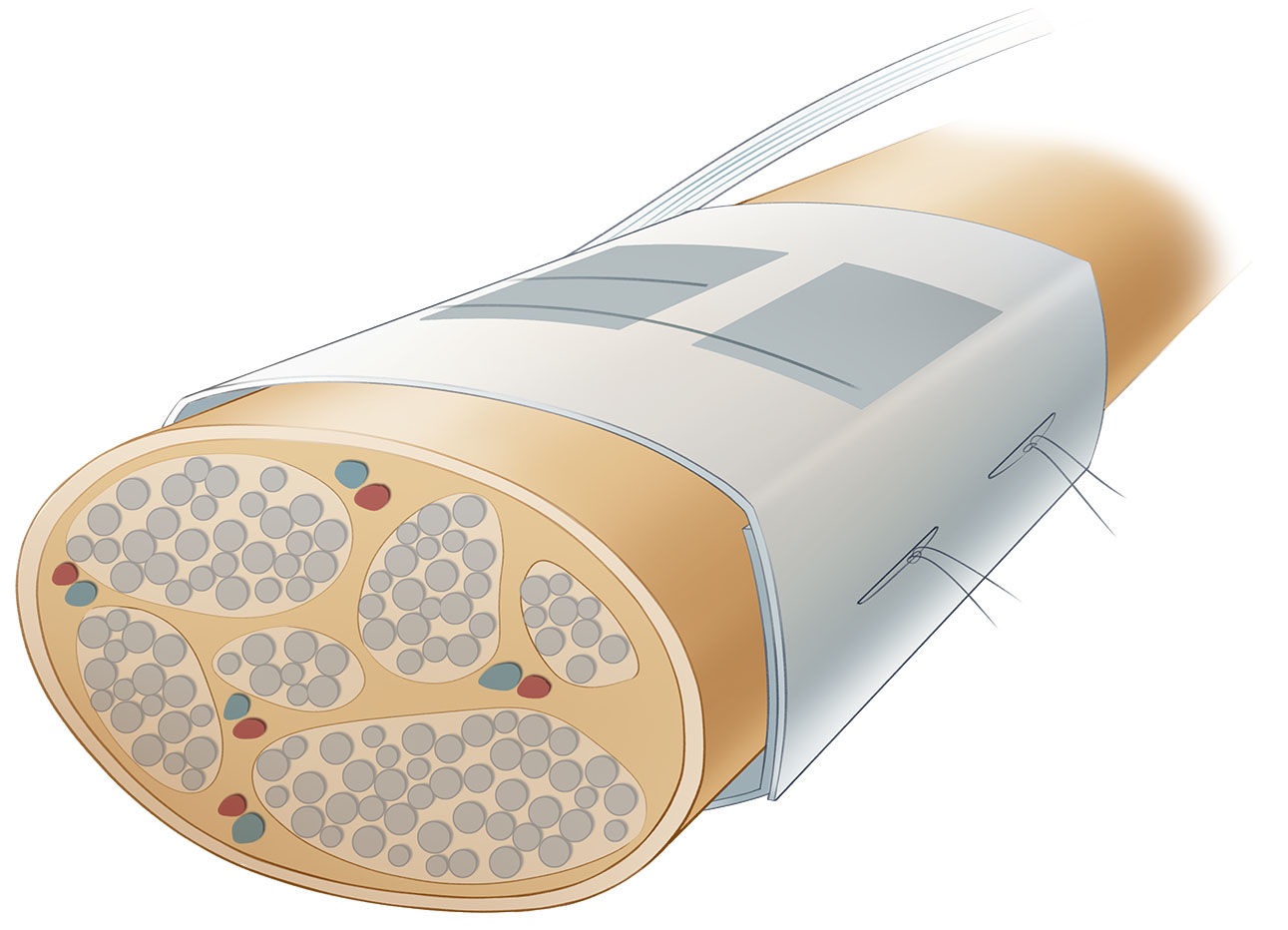
Recruited for the study after receiving breast cancer treatment at the University of Chicago Medical Center, the patient received two implanted devices called C-FINEs around intercostal nerves in her chest. These intercostal nerves supply information to the brain about sensations on the breast, and the goal of the project is to use electrical stimulation through the C-FINEs to restore the sensory information lost after the breast is removed in the mastectomy.
The entire research team gathered in Chicago to observe the implant procedure. The patient first underwent a bilateral mastectomy as part of her cancer treatment by UChicago’s Nora Jaskowiak, M.D., who took time to preserve length on the intercostal nerves. After the breasts were removed, UChicago Plastic Surgeon Summer Hanson, M.D., Ph.D., identified the intercostal nerves and implanted the C-FINEs. The PI of the NIH grant funding the study, UChicago’s Stacy Tessler Lindau, M.D., also scrubbed in to assist with the surgery. Graczyk, who attended the surgery to share her expertise with the C-FINE technology, described the surgical team as “outstanding” and said she was “proud to see all the team’s hard work lead to this critical step.”

The patient is still in the recovery process and will return to the University of Chicago Medical Center on a biweekly basis over the next several months for research sessions. During these visits, the patient will undergo nerve stimulation tests to determine what sensations she experiences. This process is crucial for researchers to determine whether nerve stimulation can produce sensation and to understand what the sensation feels like. Eventually, her CFINEs will be removed when she undergoes breast reconstruction surgery as part of her ongoing cancer treatment. “We are very grateful that she was willing to be the first patient in this study and are excited for what we can learn together,” said Graczyk.
Over the next three years, the team hopes to implant the C-FINE devices in a total of eight mastectomy patients. This will enable researchers to understand the range of sensations possible with C-FINE stimulation and to identify differences among participants. In the future, they hope to link the nerve stimulation with inputs from a sensor placed within the breast and to assess the reliability of the sensation. While all implants for the current study will take place in Chicago, CWRU-based team members will frequently travel there for research sessions, most commonly postdoc Leah Roldan. Roldan played a critical role in the technical planning and coordination of the surgery and will oversee the nerve stimulation tests. Graczyk hopes implants can eventually be performed in Cleveland as well.
The overall project idea originated from Lindau, a gynecologist who works with breast cancer patients. Lindau noticed women were not having sensation after mastectomies and envisioned how using stimulation through a neural interface could restore the sense of touch after breast removal. The CWRU team includes Graczyk, Roldan, postdoc Rohit Bose, and Human Fusions Institute director Dustin Tyler, who is serving as a consultant.