Two HFI Faculty receive prestigious NSF CAREER Award
—
Congratulations to Profs. Block and Osborn!
Two of four prestigious NSF CAREER awards in CWRU School of Engineering go to HFI faculty. Read more in CWRU’s The Daily.
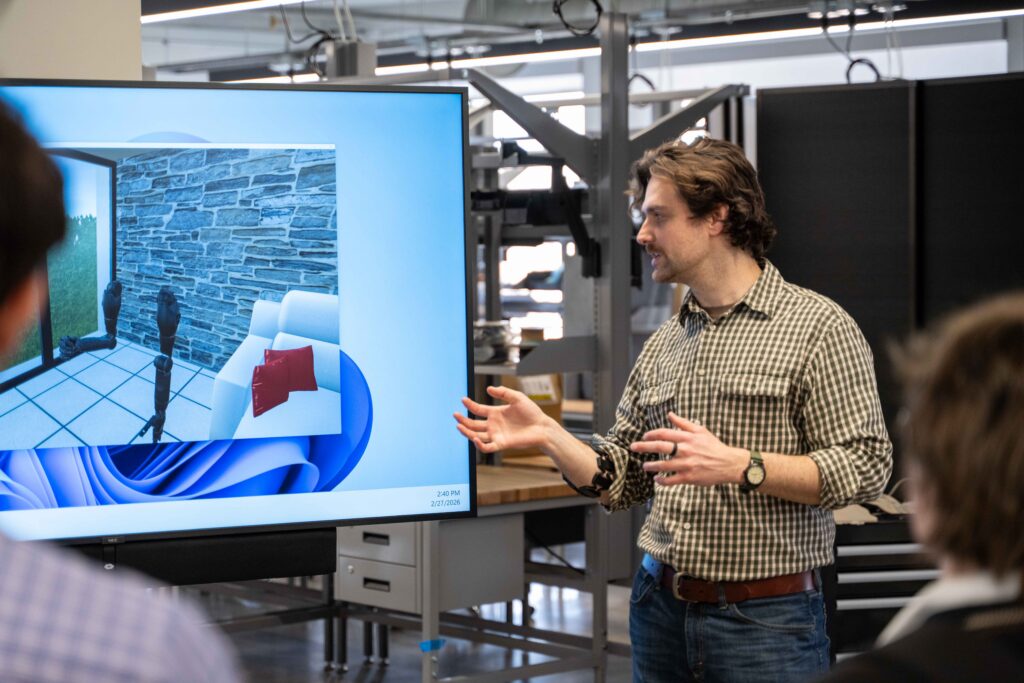

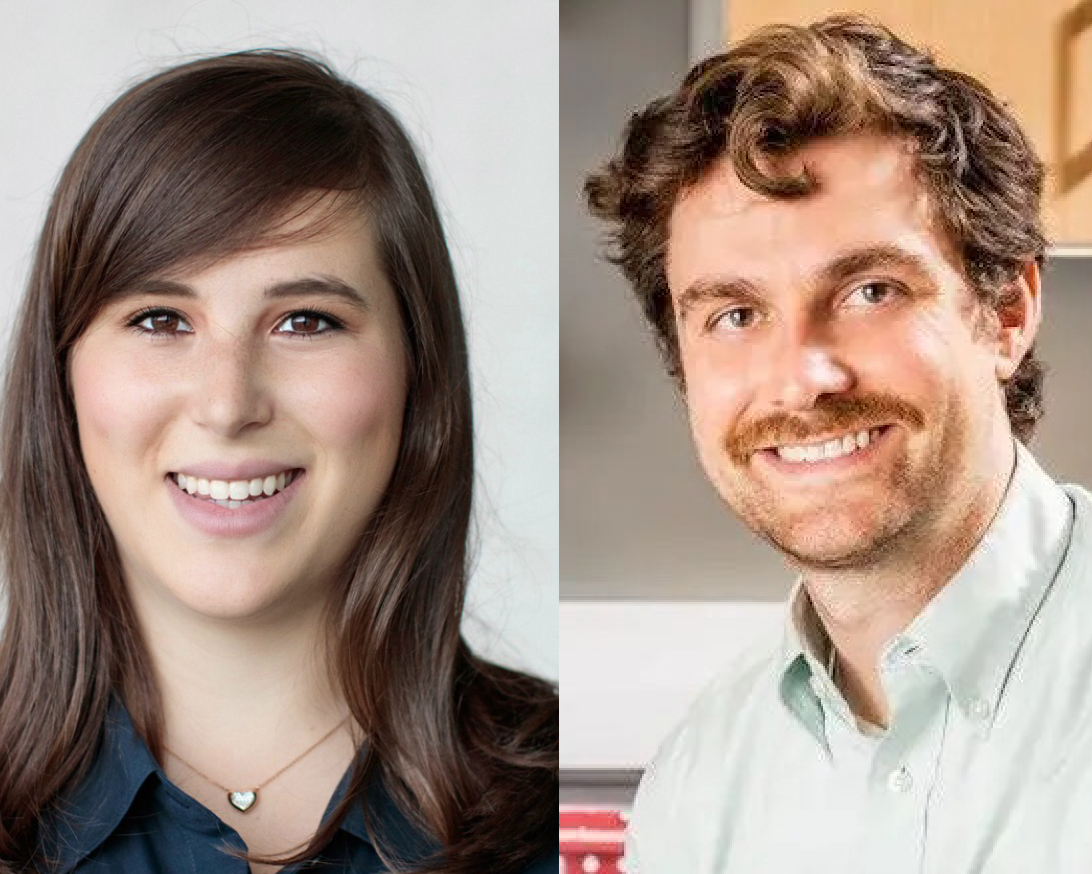
Two HFI Faculty receive prestigious NSF CAREER Award
—
Congratulations to Profs. Block and Osborn!
Two of four prestigious NSF CAREER awards in CWRU School of Engineering go to HFI faculty. Read more in CWRU’s The Daily.
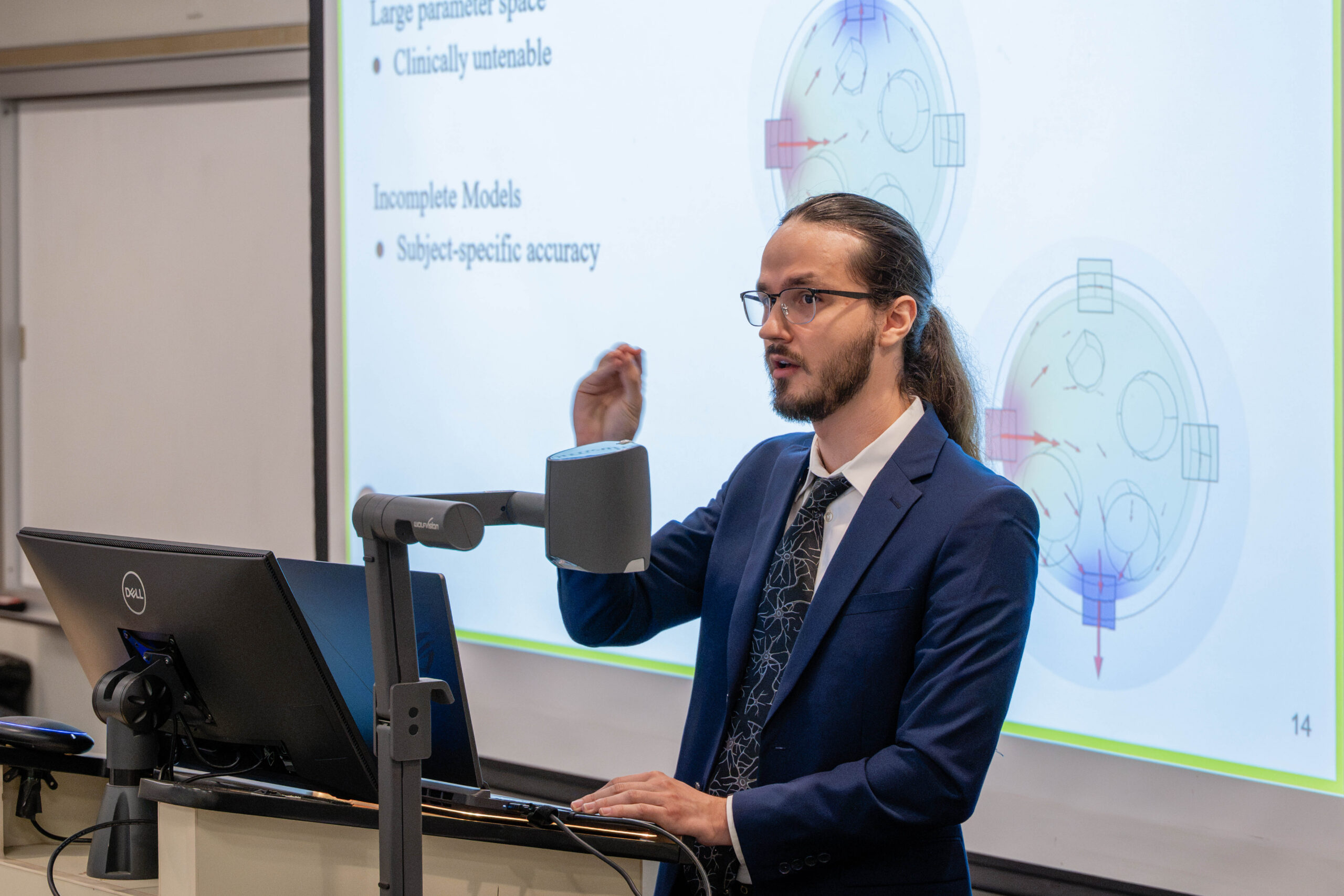
Vlad Marcu defends Ph.D. dissertation
—
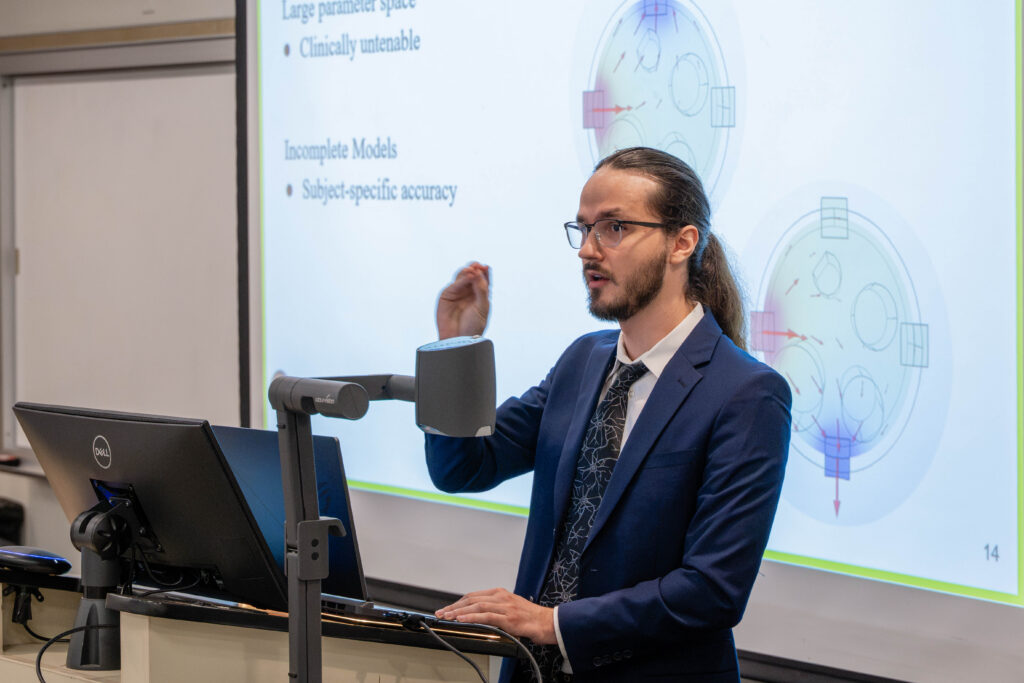
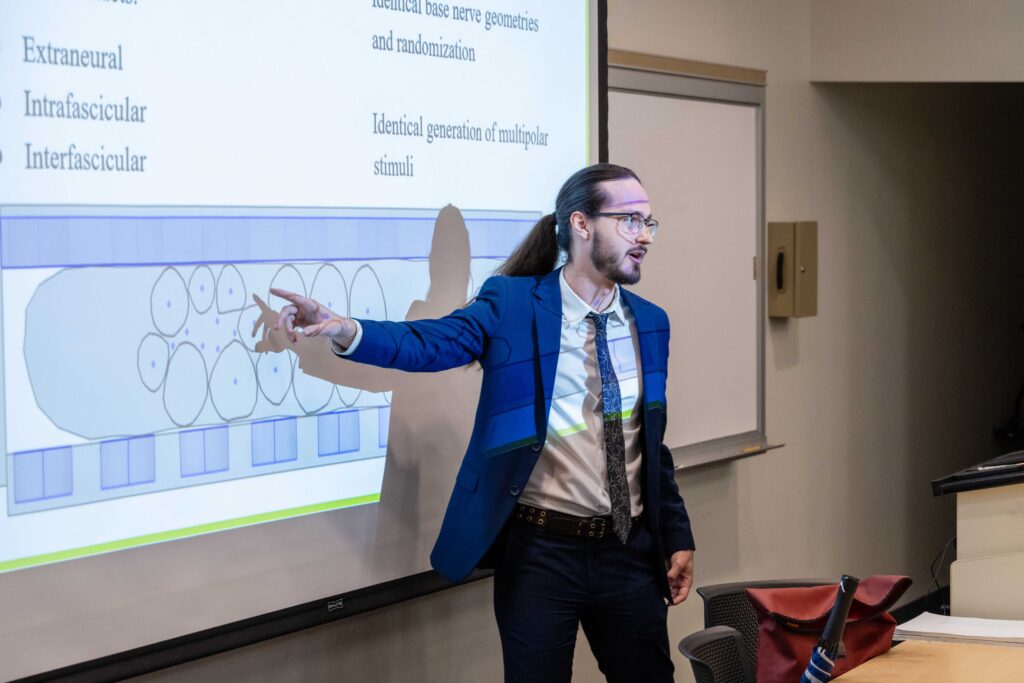
Vlad Marcu recently defended his Ph.D. dissertation titled “In Vivo and In Silico Optimization of Selective Multipolar Stimulation With Subject-Specific Models.”
Born in Transylvania, Romania, and raised in Livonia, Mich., Marcu came to Case Western Reserve University after earning his B.S. in Engineering Physics and Electrical Engineering from the University of Michigan. As an undergraduate, Marcu was interested in quantum computing and neuromodulation, but became increasingly interested in biomedical engineering as he took more classes. As a teenager, he enjoyed anime like Ghost in the Shell and was fascinated by articles about artificial organs. When it came time to start graduate studies, he was drawn to CWRU because of the passion he saw in other researchers in Professor Dustin Tyler’s lab. He praised Tyler for “pushing for real, scientific statements and analyses.”
Primarily interested in subject-specific modeling of nerve activation and real-time calculation of control parameters, Marcu’s Ph.D. dissertation on nerve stimulation models demonstrates his deep expertise. He conducted multiple animal experiments, including some with a person with a spinal cord injury, to develop models that do not require imaging, showcasing his practical impact and technical skill. His work integrates computational techniques, machine learning, linear algebra, and differential topology to translate findings into clinical settings and inspires confidence in his capabilities.
Looking back on his time at CWRU, Marcu is most proud of his methods for calculating multipole stimulation currents from his simulation results and of how they bring his undergraduate and graduate studies together. He mathematically defines the voltages a given electrode could apply to a nerve from a combination of events. Then he uses a projection method to calculate currents that can activate a nerve in milliseconds rather than the minutes it used to take. “It was a genuinely original thought that used knowledge I have from all over to solve a problem that a lot of other people have had in a good, principled, generalizable way,” he said. “This method opens up the possibility for researchers to consider a much wider array of possibilities when running simulations because the calculation is so much faster.”
In the coming weeks, Marcu will become a postdoc at Massachusetts General Hospital, where he will work on peripheral nerve models that more accurately reflect MRI-derived activation. In the long term, he hopes to make a high-resolution interface “so that as far as the brain knows, a prosthetic limb or organ might as well be the original.”
Clare Hess completes summer internship at HFI
—
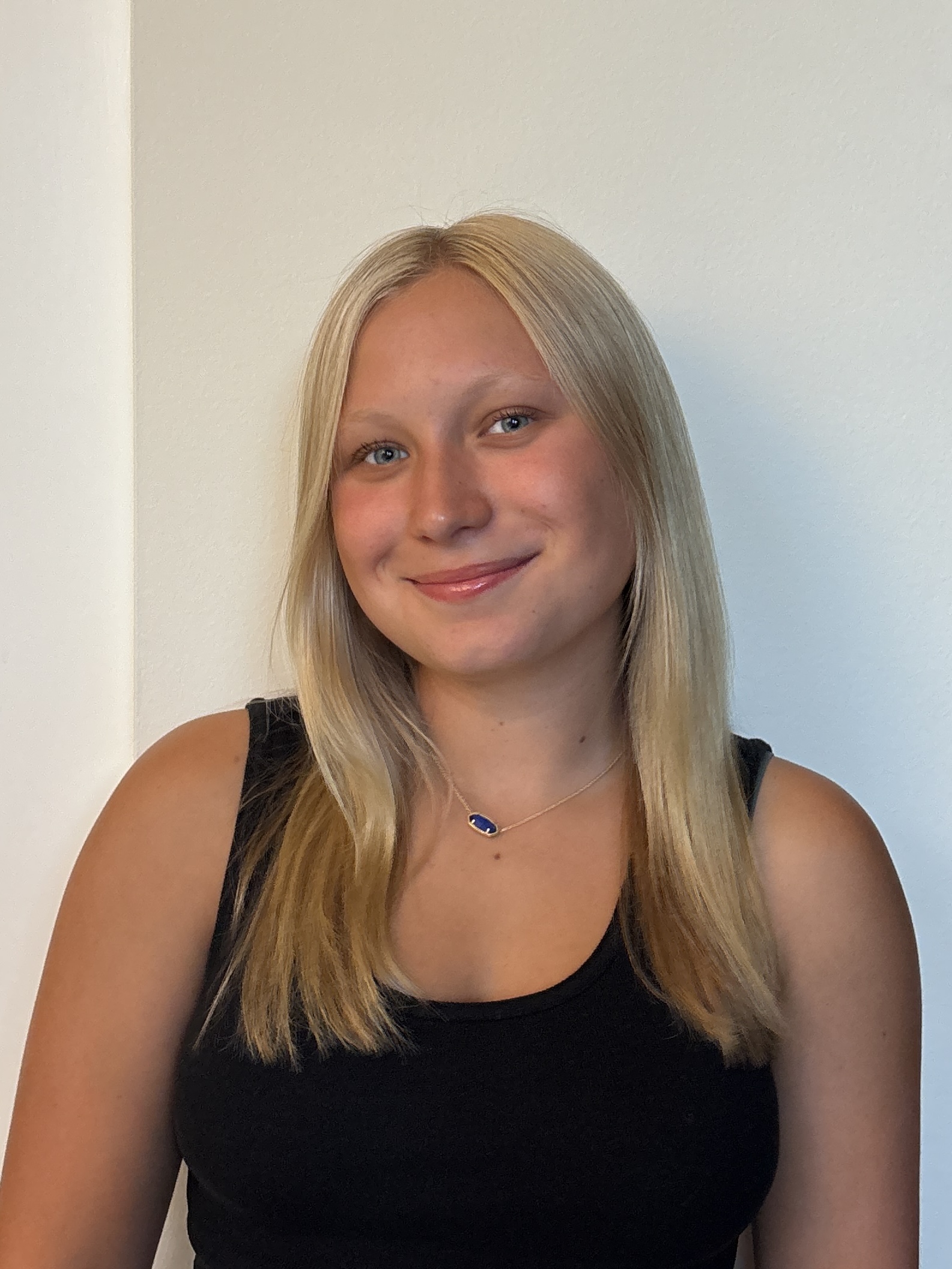
A rising sophomore studying computer science and cognitive studies at Vanderbilt University, Clare Hess wanted to get involved in hands-on lab research while home in Cleveland for the summer. After discovering the Social and Physical Human-Robot Interaction (SaPHaRI) Lab at Case Western Reserve University, she reached out to the lab director, Assistant Professor Alexis E. Block. She interviewed with Dr. Block and several team members before joining the lab for the summer.

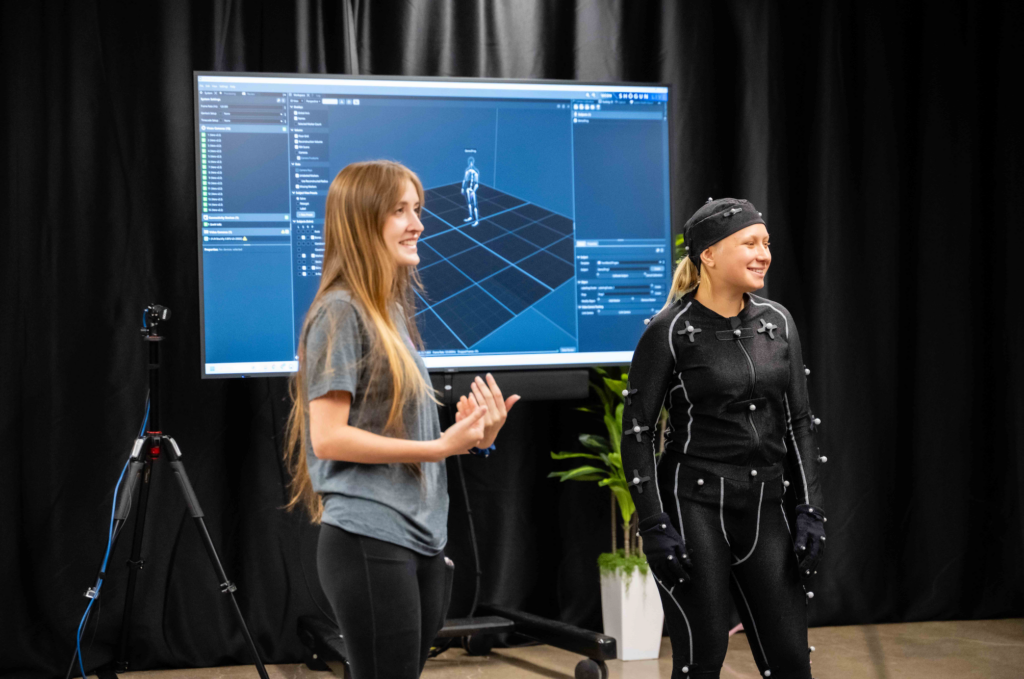
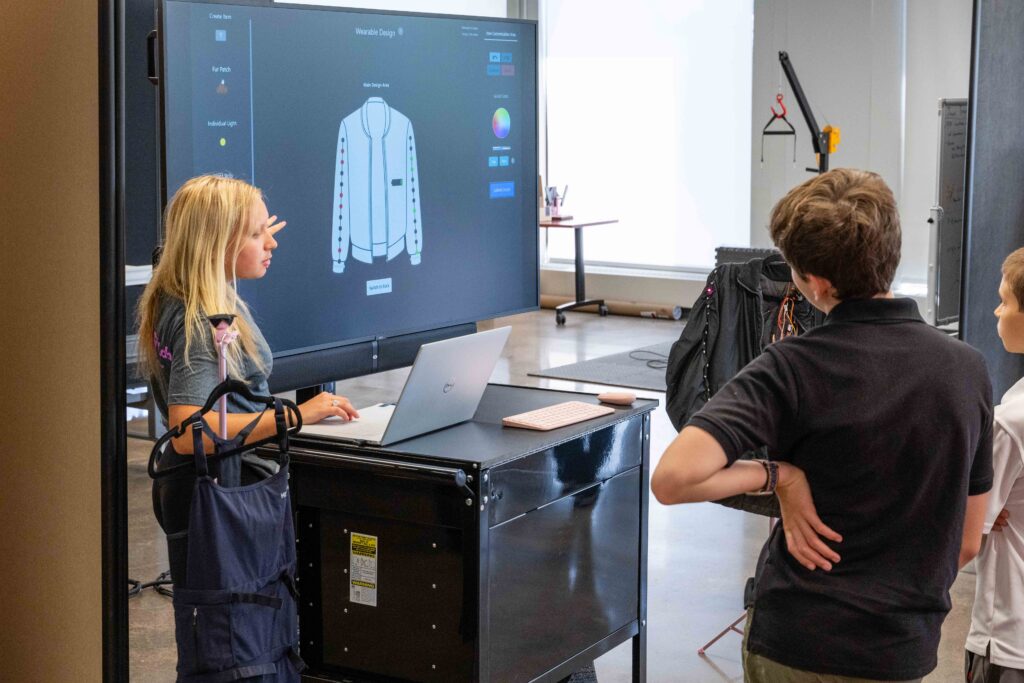
Before coming to the SaPHaRI Lab and the Human Fusions Institute, Hess had never worked in the field of human-robot interaction. “I had no idea how broad the field of human-robot interaction was,” she said. “I think it’s really cool how knowledge about human behavior, social interaction, and psychology can directly influence the way robots and other technologies are designed.” She primarily worked on two projects: the Human Comforting Touch Project, led by Ph.D. student Lilia Colbrunn, in which she collected data in a motion capture environment while pairs of participants interacted supportively, and the Affect-Sensing Wearables project, led by undergraduate student Noah Medrano, for which she conducted demonstrations, debugged the existing wearable, and researched, designed, and prototyped new ways for the wearable to express information. Her contributions to the Human Touch Comforting Project, including creating materials, conducting pilot studies, and contributing to the research paper, significantly enhanced her research skills and understanding of experimental design.
While at CWRU and HFI, Hess particularly enjoyed working with the motion capture equipment. “I had never been exposed to that type of technology before, and I am not sure where else I would have had the opportunity to learn how to use it,” she said. “Working with the system has already made me think about all the potential applications of that technology in research and beyond.” Her hands-on experience with this technology broadened her technical skills. Having enjoyed working with faculty, graduate students, and undergraduates across HFI at different stages of their careers during the summer, she is proud to have expanded her skill set across different disciplines. “My time in the lab has helped me become a more well-rounded student and researcher,” she said. “I began the internship with limited electrical engineering experience, and I gained hands-on experience working with electronics through the Affect-Sensing Wearables project.”
As Hess prepares to return to Vanderbilt, she looks forward to taking a mixture of computer science, mathematics, neuroscience, and psychology classes. Having taken a few psychology classes in the past, her time in the SaPHaRI lab “helped me understand how concepts from my courses can be applied to experimental design and real-world research.”
“It has been a true pleasure working with Clare this summer,” said Dr. Block. “Her energy and enthusiasm are palpable and infectious. She impressed me with her strong work ethic, intellectual curiosity, and ability to quickly learn new skills. She made meaningful contributions to multiple interdisciplinary research projects, and I am confident that she has a very bright future ahead of her. Clare will always be welcome back in the SaPHaRI Lab!”
HFI lab members present at IEEE Haptics Symposium, Chua and students win award
—
The Human Fusions Institute was well-represented at the recent International Electrical and Electronics Engineers Haptics Symposium. Case Western Reserve University Assistant Professor Zonghe Chua and his Ph.D. students Jiaji Su and Irene Bhunia received the Honorable Mention Technical Regular Paper Award. Other students and faculty from CWRU, Cleveland State University, and University of California, Los Angeles traveled to Reno, Nevada, to showcase their research to fellow engineers from North America, Europe, and Asia.
For their award-winning paper, Chua and his students designed a pneumatic fingertip suction-feedback system for telemanipulation and conducted a user study with two experiments involving ten participants. Their recognition at the symposium underscores the institute’s leadership in haptics research. Audience members showed particular interest in the group’s psychophysics-based analysis of user behavior. Su found the experience of running a study from start to finish valuable, which further demonstrates our team’s research capabilities.
Ph.D. student Laura McGann, who studies with HFI Director Dustin Tyler, presented a poster on the role of haptics in the lab’s fully wearable, immersive human-in-the-loop interface, in which participants use body movements to complete manipulation tasks with a virtual robot arm. So far, she has worked with 27 human participants. She was encouraged by the positive reception of her poster and the enthusiasm for her multi-metric, transdisciplinary approaches.
Another one of Dr. Tyler’s Ph.D. students, Rachel Jakes, presented a hands-on demonstration entitled “Stereo Neural Haptics: Unencumbered Audio-Tactile Congruency.” Her demonstration delivers two independent haptic signals on the same finger synchronized with stereo sound. “Using surface electrical nerve stimulation, proximal activation of the nerves in the finger elicits spatially distinct sensations referred toward the fingertip,” said Jakes. “This system provides dynamic spatial feedback and precise temporal and intensity modulation, critical features for immersive applications with synchronized multisensory inputs. Further, the ring interface design keeps the fingertip free, enabling users to interact with the local environment unencumbered while receiving haptic data in mixed reality applications.” She had long lines for the demo on both days, including groups from Apple, Meta, and Google, and received a very positive reception.
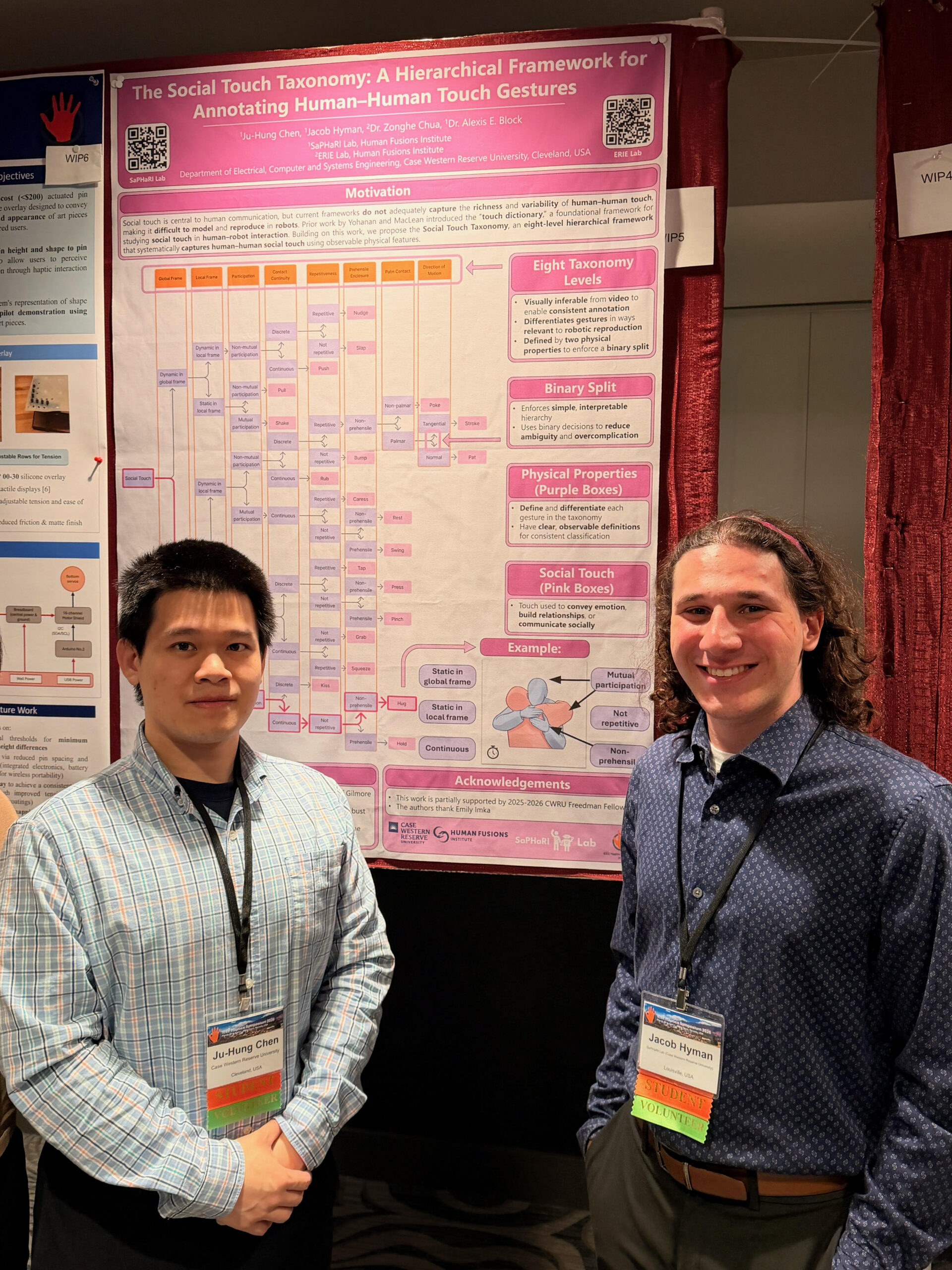
Ph.D. student Ju-Hung Chen and M.S. student Jacob Hyman represented Assistant Professor Alexis E. Block’s Social and Physical Human-Robot Interaction (SaPHaRI) Lab. Their poster, a collaboration with Chua, focused on the Social Touch Taxonomy, an eight-level hierarchical binary decision tree categorizing common human-to-human social physical interactions. The goal is to use this as a reference to develop a robotic system delivering realistic social touch. “We had a lot of positive reception to our poster, and many people seemed to be interested in our work,” said Hyman. “We also got a lot of useful comments about what we can improve in our research and our future paper.”
“I’m incredibly proud of Jacob and Ju-Hung for their work at the IEEE Haptics Symposium,” said Dr. Block. “Their social touch taxonomy addresses a fundamental gap in how we understand and design touch in human-robot interaction, and the strong engagement it received reflects the field’s need for this direction. It was especially exciting to present this as a collaboration with Dr. Chua, showcasing the kind of interdisciplinary work we’re building within HFI.”
UCLA Ph.D. student Ben Forbes enjoyed the opportunity to see his Ohio-based HFI counterparts at the conference. He presented his research protocol, “Towards Human-Centered Teleoperation Through Learning-based Shared Autonomy Control,” which centers on human experience in teleoperation. Forbes appreciated the feedback about ideas for shared autonomy algorithms. “People appreciated the way that our work focused on the human as opposed to robotic task performance,” he said. “I gained a lot of valuable perspectives from prominent figures in academia about where they think the field of haptics and tactile sensing is going. I learned a lot about measures of the human sense of touch and about ways to improve my research. I appreciated the perspectives of folks from industry.”
Cleveland State Ph.D. student Kelleigh Pettegrew shared the ways researchers describe and understand the experience of human-in-the-loop research. “Many people remarked that this was an interesting and understudied area of research, and that they would like to see follow-up work,” she said, while noting that she enjoyed learning about work being done on haptics to support rehabilitation and physical therapy while in Reno.
Also an HFI Ph.D. student from Cleveland State, Claire Foley focused on knowledge integration of transdisciplinary research teams. “I find that teams cycle through periods of structure, periods where norms and roles are defined, and anti-structure, periods where roles and norms are loosened,” she said. “I also find that moving through this dynamic is effortful, but requires less effort when all participants’ perspectives, knowledge, and experiences are valued as meaningful contributions to the work, regardless of discipline, role, or seniority. In many of my conversations, people expressed enthusiasm for HFI’s haptics research more broadly, both in its scope and approach. One person said, ‘It seems like this team is having fun while doing research.’ I told them that this was absolutely true.”
In addition to giving their own presentations, researchers had the opportunity to network with other engineers in the haptics field. “One of the most interesting things I learned (at the conference) was that the haptics field itself is still in its infancy, and there is a lot of interesting work going on right now as the field grows,” said Chen.
Team science for human-centered research
—
What would we lose if we sacrifice the human in the ‘human-tech’ relationship?
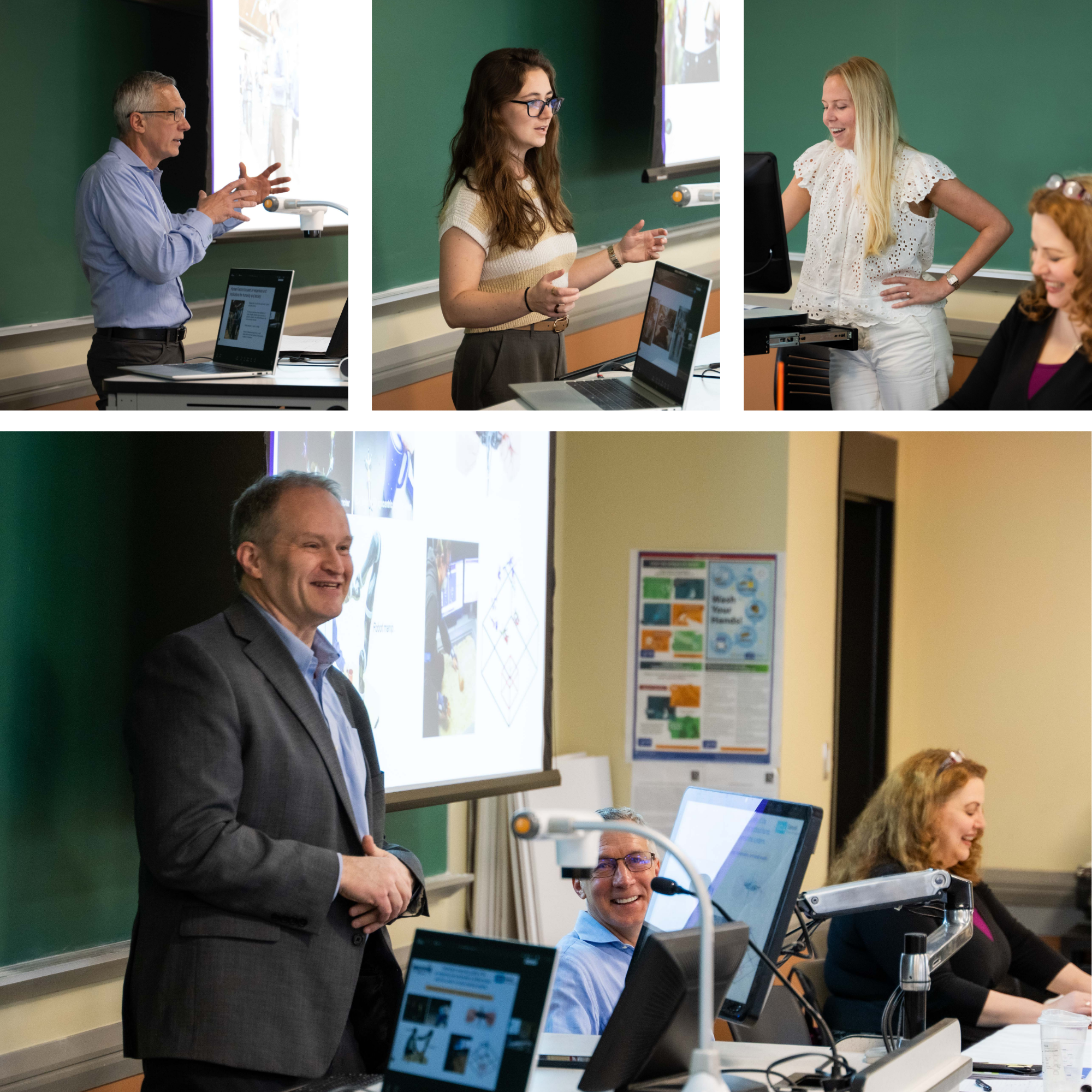
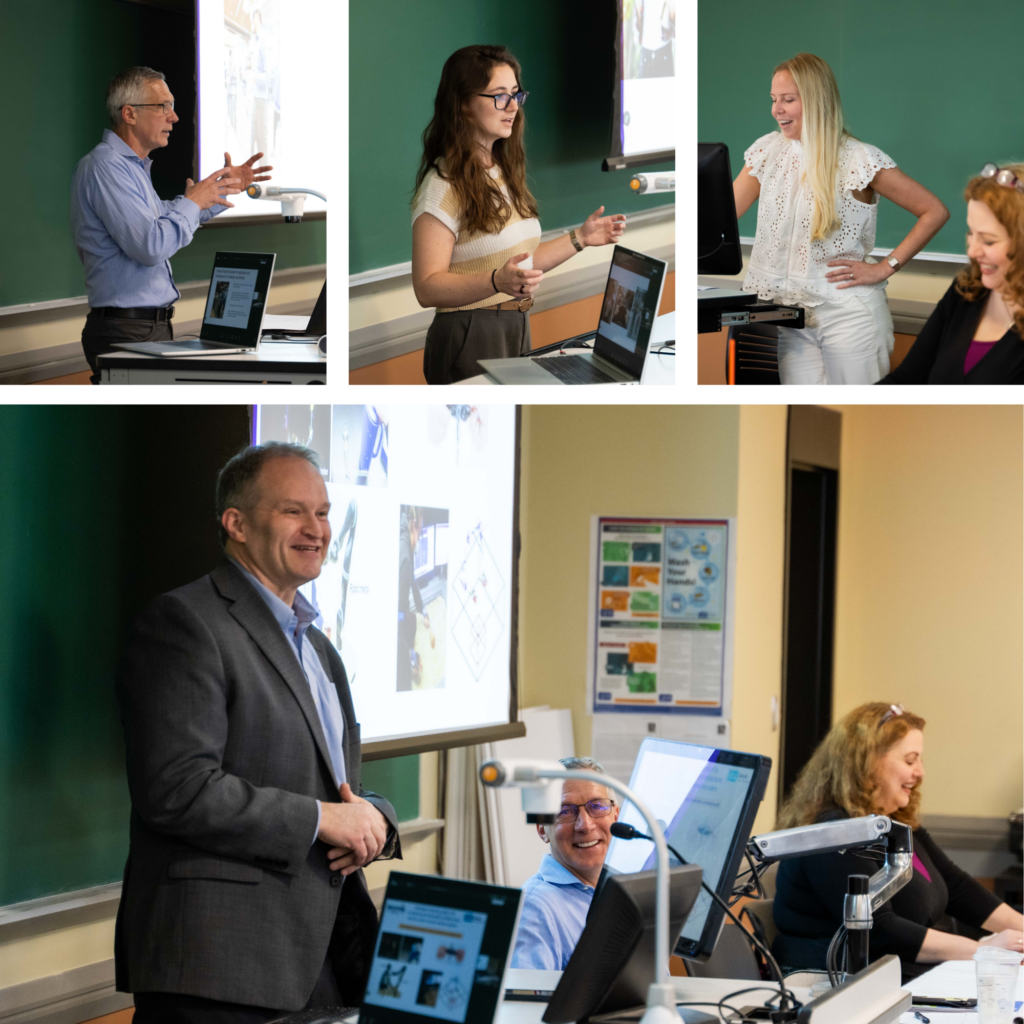
Experts from Case Western Reserve University, UCLA, and Cleveland State University came together for a panel discussion about the ways transdisciplinary team science is being used to tackle complex challenges at the intersection of human experience and emerging technologies.
Now more than ever it is necessary to work together to navigate the realities of technology ethically. Our goal is always to serve humanity.
Some takeaways from the conversation — We shouldn’t be replacing the human, but amplifying the human: human empathy, human consciousness, human community, human creativity. Our sense of where ‘self’ ends and ‘community’ begins is artificial; we’re more connected than we’re aware of.
The panel discussion was organized into two sections:
Panel I: Principal Investigators in Conversation — Drs. Veronica Santos (UCLA), Dustin Tyler (CWRU), and Nick Zingale (CSU) discussed the realities of building and sustaining transdisciplinary team science across institutions.
Panel II: Doctoral Scholars — PhD students Kelleigh Pettegrew, Laura McGann, Benjamin Forbes and Claire Foley shared about their research and reflected on what it means to be trained at the convergence of engineering, health sciences, and human experience.
Thank you to CSU for hosting this Beyond Boundaries panel, and thank you to our moderator (Shannon E. French) and panelists (Dustin Tyler, Veronica J. Santos, Nick Zingale, Laura McGann, Benjamin Forbes, Kelleigh Pettegrew, and Claire Foley).
SaPHaRI Lab members present research in Edinburgh
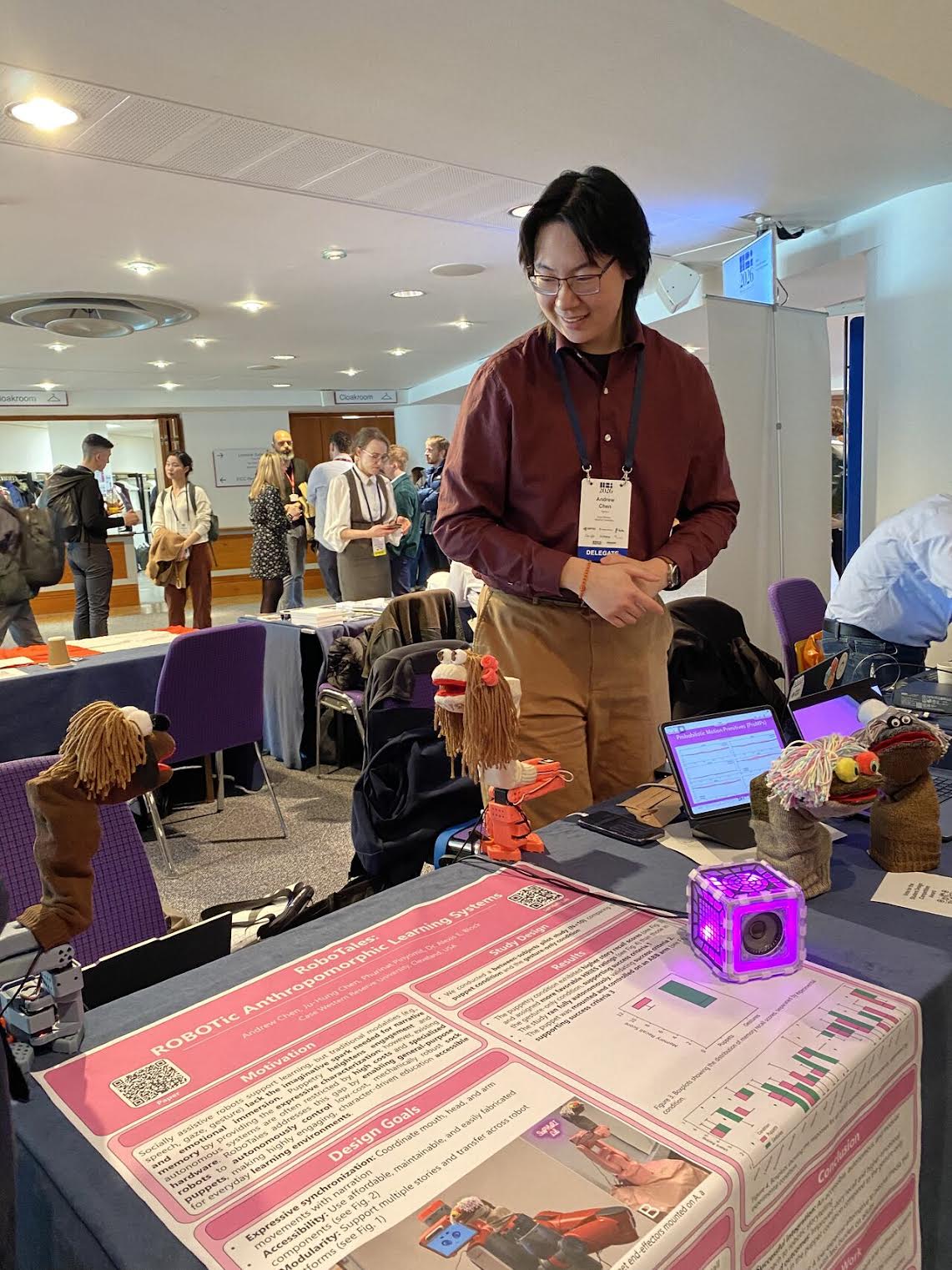
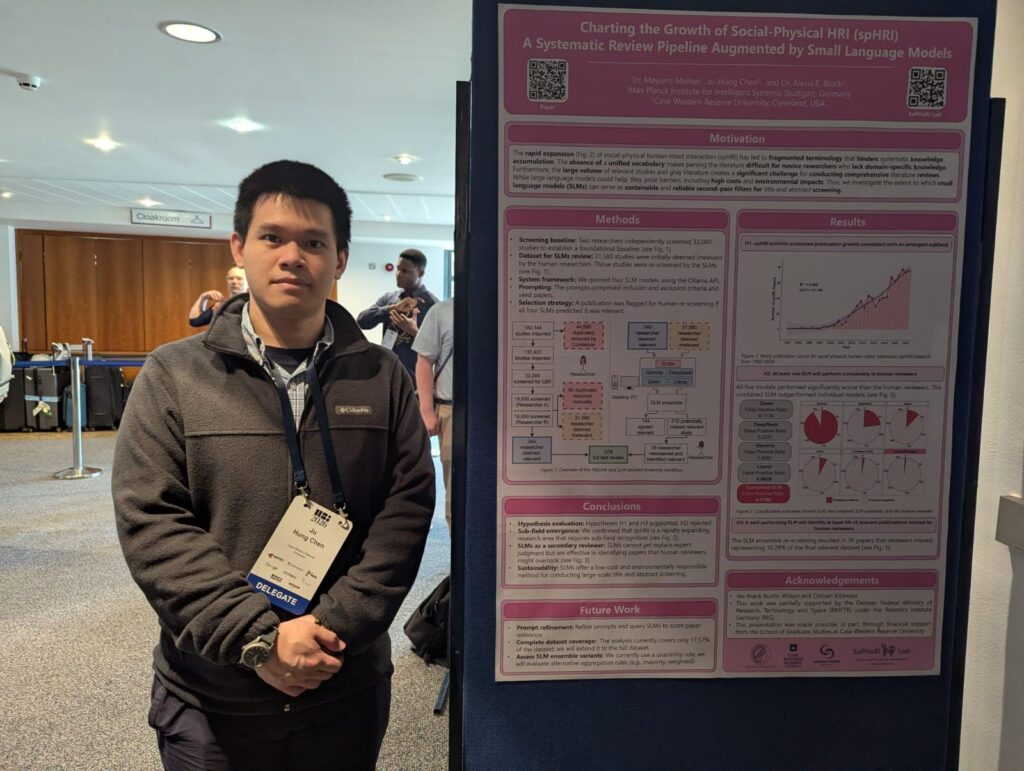
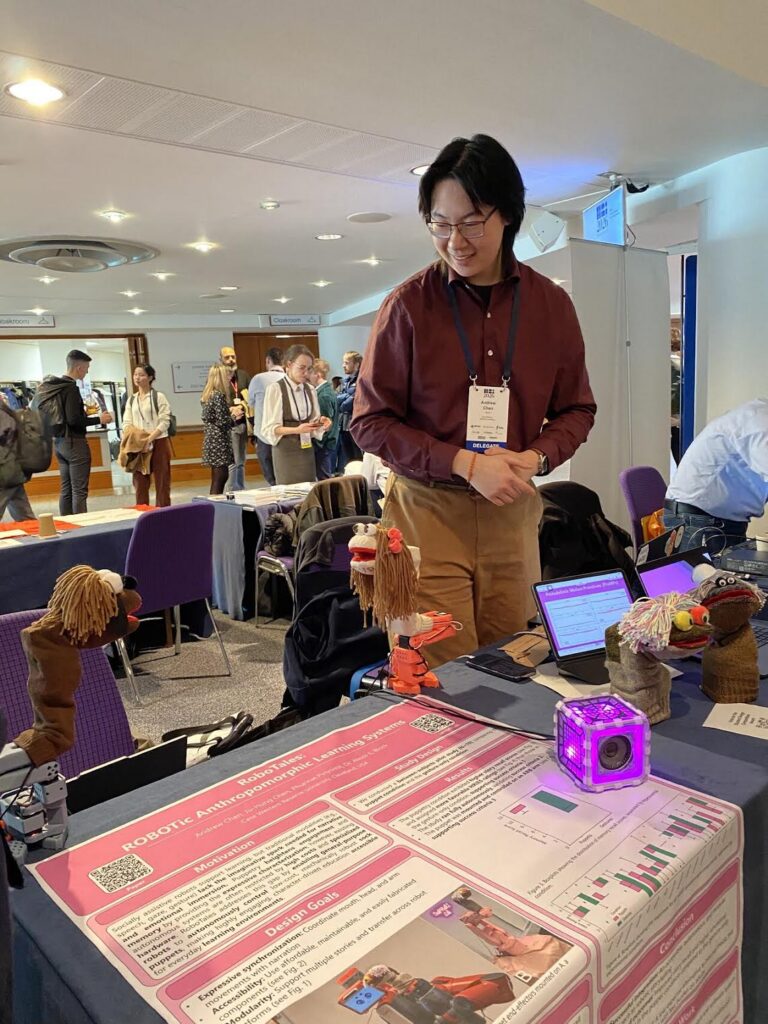
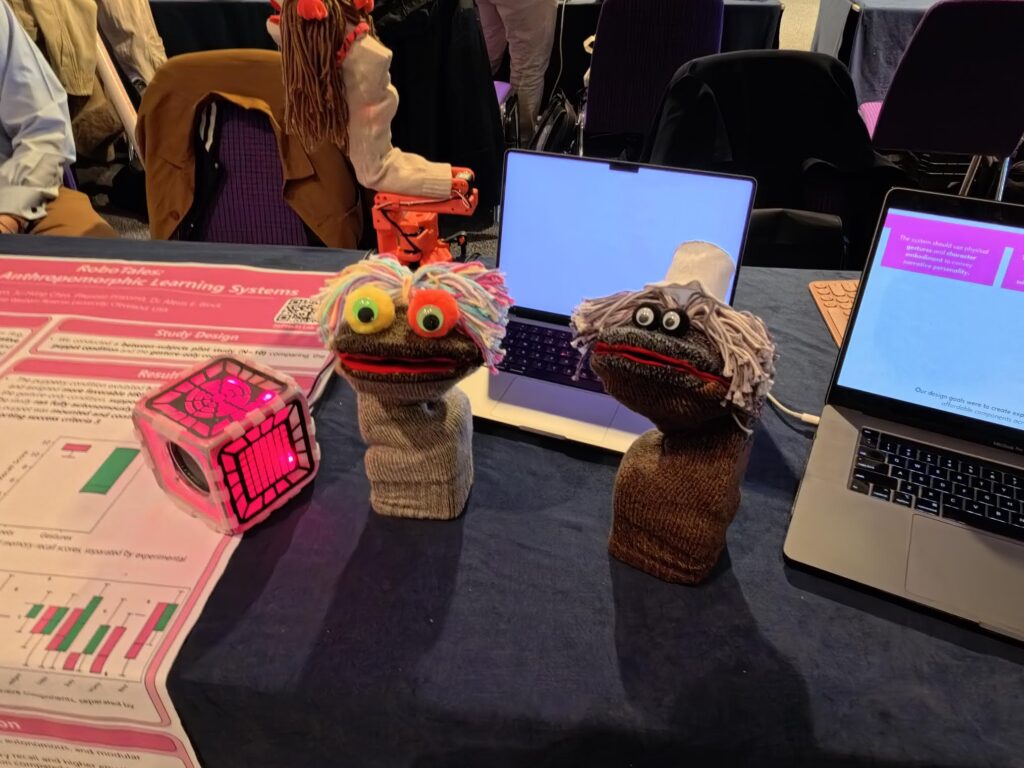
The Social and Physical Human-Robot Interaction (SaPHaRI) Lab had a strong showing at the recent ACM/IEEE International Conference on Human-Robot Interaction (HRI) in Edinburgh, Scotland. M.S. student Andrew Chen and Ph.D. students Ju-Hung Chen and Phurinat (Chester) Pinyomit presented the SaPHaRI lab’s student design challenge, RoboTales: Robotic Anthropomorphic Learning Systems. In addition, Ju-Hung Chen presented a late-breaking report titled Charting the Growth of Social-Physical HRI (spHRI): A Systematic Review Pipeline Augmented by Small Language Models. Assistant Professor Alexis E. Block also co-organized the workshop “Workshop YOUR study design 2026!”. All three papers were published in the conference’s companion proceedings.
“I am so proud of Andrew, Ju-Hung, and Chester for their work at HRI,” said Dr. Block, director of the SaPHaRI lab. “This is the leading conference in our field, and having their work accepted and presented there, especially as their first publications, is an incredible accomplishment. I heard wonderful feedback from colleagues about the live RoboTales demo, and it meant a lot to know they represented the SaPHaRI Lab and CWRU so well.”
For the Student Design Challenge, the team developed expressive robotic storytellers using custom-designed sock puppets. By synchronizing robotic arm gestures and puppet mouth movements with narrated audio, they created a more engaging storytelling experience. The project attracted wide-ranging interest, from fashion researchers curious about puppet design to robotics experts focused on motion trajectories and control, as well as children attending the conference’s public sessions. “We were thrilled by the diversity of interest our project received,” said Pinyomit.
Ju-Hung Chen also presented a Late-Breaking Report exploring the use of small language models as secondary reviewers in the title and abstract screening stages of a PRISMA systematic review. By adapting multiple low-parameter models, the team identified relevant studies that had previously been misclassified as irrelevant. Attendees were particularly impressed that the work was conducted on a standard desktop computer, demonstrating an accessible pathway for researchers with limited computational resources to conduct rigorous review studies.
In addition to presenting his research, Pinyomit contributed over 20 hours as a student volunteer and was recognized with the conference’s Most Valuable Student Volunteer Award. His responsibilities included manning registration, supporting audiovisual operations, assisting with Q&A sessions, and ensuring smooth conference logistics. “Volunteering gave me a behind-the-scenes perspective on the conference and created a unique opportunity to connect with peers and organizers,” he said. “Whenever the organizers needed a volunteer to take on a sudden new task, I made sure I was there to step up and help out.”
Beyond their presentations, the students highlighted the broader impact of attending HRI. All three were visiting the United Kingdom for the first time and engaged with researchers from around the world. “It was wonderful to have so many HRI researchers of all experience levels in one place,” said Andrew Chen. “ I met amazing people and learned an enormous amount in a very short time.”
Meet HFI’s new postdoc, Russell Hardesty
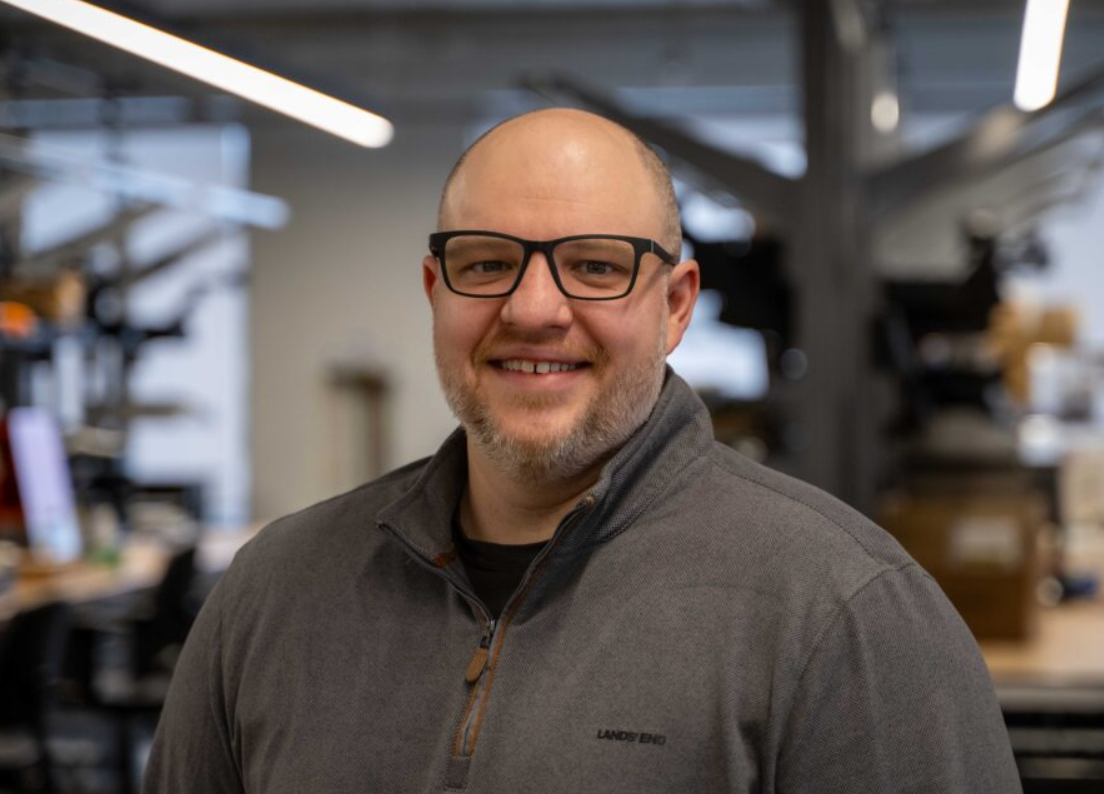
When Russell Hardesty was an undergraduate studying biomedical engineering at Case Western Reserve University, he enjoyed learning about the intersection of engineering and biological systems, particularly how engineering principles can advance human health. His passion for improving quality of life through neurotechnology motivates his current research. Now, he is returning to his alma mater as a new postdoc at the Human Fusions Institute.
In his new position, Hardesty will work on Assistant Professor Emily Graczyk’s iSens RCT study, developing advanced neuroprostheses that integrate intuitive myoelectric control with sensory feedback. This work aims to improve prosthetic functionality and user experience, contributing to innovations in neuroengineering and human health. “I’m looking forward to working with such a diverse and collaborative team of students, researchers, clinicians, and therapists,” he said.
Hardesty comes to HFI from the National Center for Adaptive Neurotechnologies, where he studied long-term motor learning processes in human locomotion and explored operant conditioning techniques for modulating spinal reflexes, including the cutaneous reflex. His Ph.D. research on cortical and spinal pathways contributing to limb coordination demonstrates his deep expertise in sensorimotor control, inspiring trust among stakeholders.
When Hardesty is not in the lab, he enjoys going to the gym, reading, cooking, traveling, watching movies, and spending time with his wife.

Explant performed on first Bionic Breast study participant
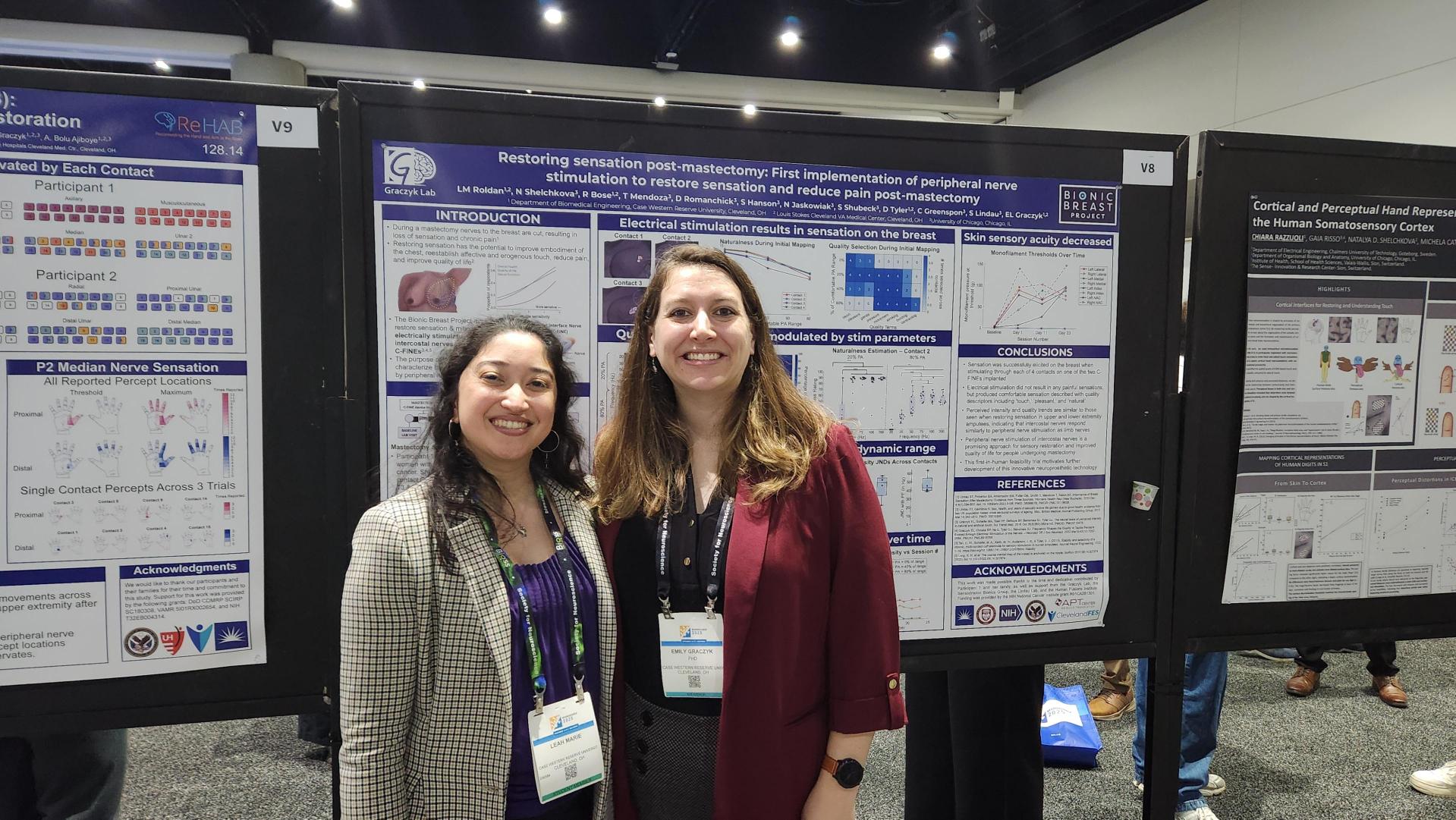
In May 2025, a group of Human Fusions Institute researchers, led by Assistant Professor Emily Graczyk, PhD, joined researchers at the University of Chicago to implant the first participant of the Bionic Breast Project. The Bionic Breast Project aims to use nerve stimulation to restore tactile sensation to women undergoing mastectomy. The project provides a unique opportunity to evaluate sensory restoration techniques previously used with amputees and spinal cord injury participants in the breast for the first time. Between May and October, Human Fusions Institute postdoc Leah Roldan made several trips to Chicago to meet with the study participant and conduct experiments to assess sensations.
Experimental sessions were conducted twice a week over 12 weeks and involved electrical stimulation of the intercostal nerves to elicit a range of sensations on the breast, as well as to characterize these sensations using psychometric methods. Intact skin sensation was also evaluated during this time to better understand how touch sensitivity is impacted post-mastectomy and how these sensations may change over time. Preliminary results with this participant have been very promising for the continued investigation and development of the Bionic Breast technology for patients undergoing a mastectomy.
In October, the participant had the C-FINEs explanted during her reconstruction surgery. She is currently returning to day-to-day activities with no pain. The team remains committed to thorough analysis and to supporting her recovery, and she will continue to participate in phone surveys over the next six months to continue evaluating changes to quality of life and pain.
The Bionic Breast team is currently recruiting participants for the next implant. In November, the team held a symposium in Chicago, where Graczyk and Roldan presented preliminary findings and discussed the next phase of the work. Roldan said, “It was an excellent opportunity to reconnect with collaborators, share data, and hear feedback and perspectives from patient advisors who have undergone mastectomies”. Discussions on future directions, funding, and publication fostered a sense of shared purpose and collective progress among all involved.
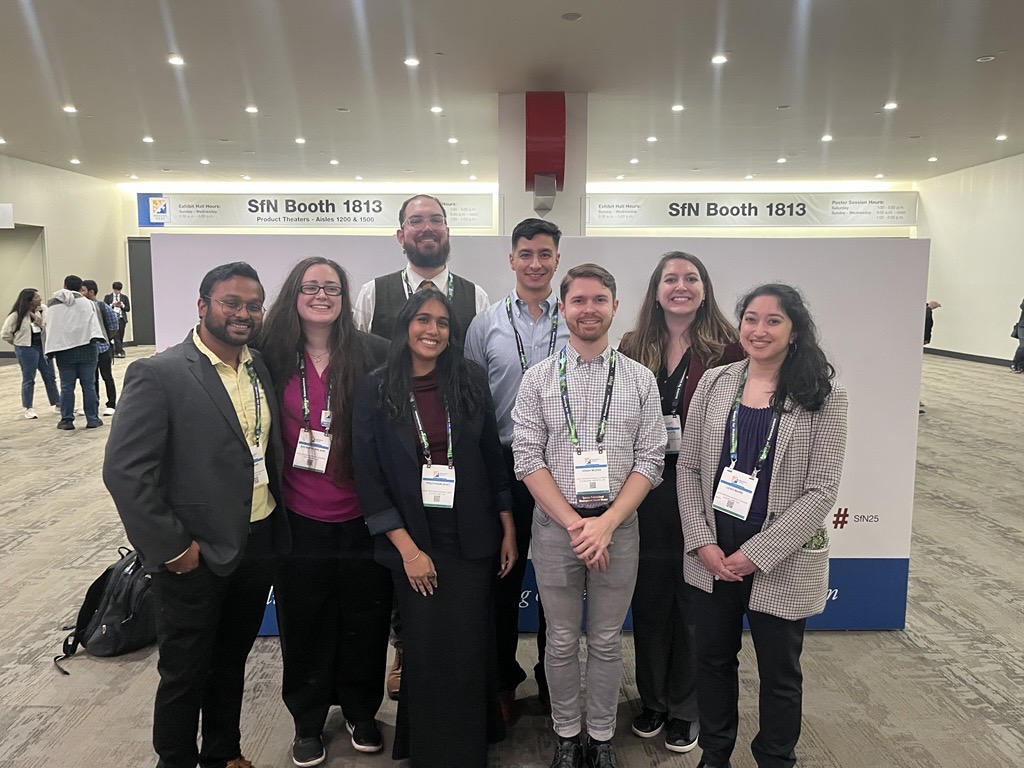
A week after the seminar, Roldan traveled to the Society for Neuroscience conference and shared a poster with preliminary results from the first study participant at a poster session. She said many people stopped by her poster to ask specific questions and share insightful feedback, including several people personally impacted by breast cancer. Graczyk said, “The community’s interest in the project was encouraging to see”. The team emphasized both the widespread impact of the project on breast cancer and in future applications of electrical stimulation technology.


Luis Mesias defends Ph.D. dissertation
Luis Mesias recently defended his Ph.D. dissertation, “From Psychophysics Evaluation to Application: Developing Haptic and Visual Interfaces.”
Interested in haptics, electrical stimulation, and virtual reality, Mesias’s research brings together all three areas. Throughout his Ph.D. studies, he has conducted human-subject research across different subjects, evaluated multiple electrical stimulation paradigms, and developed virtual reality platforms to test and demonstrate his ideas. Looking back on his time at Case Western Reserve University, he is particularly proud of creating a software ecosystem that enables multiple software packages and operating systems to interface with a custom-built wearable surface stimulator that is now moving toward open-source release.
Originally from Guatemala City, Guatemala, Mesias decided to come to CWRU for its “strong emphasis on stimulation science within the biomedical space, while still giving me the freedom to explore how those ideas could be applied to virtual reality. That combination allowed me to work at the intersection of engineering, human perception, and emerging extended reality technologies.” He thanked his advisor, Associate Professor Michael Fu, for supporting him both as an undergraduate and during his Ph.D. years. “His mentorship helped me build a research niche at the intersection of VR and haptic interfaces, which has shaped both my interests and career goals. Beyond technical guidance, he consistently offered thoughtful advice on personal and professional growth.”
Now that he has finished his studies, Mesias hopes to pursue a career in industry, preferably with a company involved with haptics or virtual reality. While he enjoys conducting research, he said that his greatest motivation is “turning ideas into practical, usable technology.”


Human Fusions Institute team members present at Society For Neuroscience 2025
Multiple members of the Human Fusions Institute team had the opportunity to showcase their research to an international audience at the annual Society for Neuroscience conference in San Diego this past November.
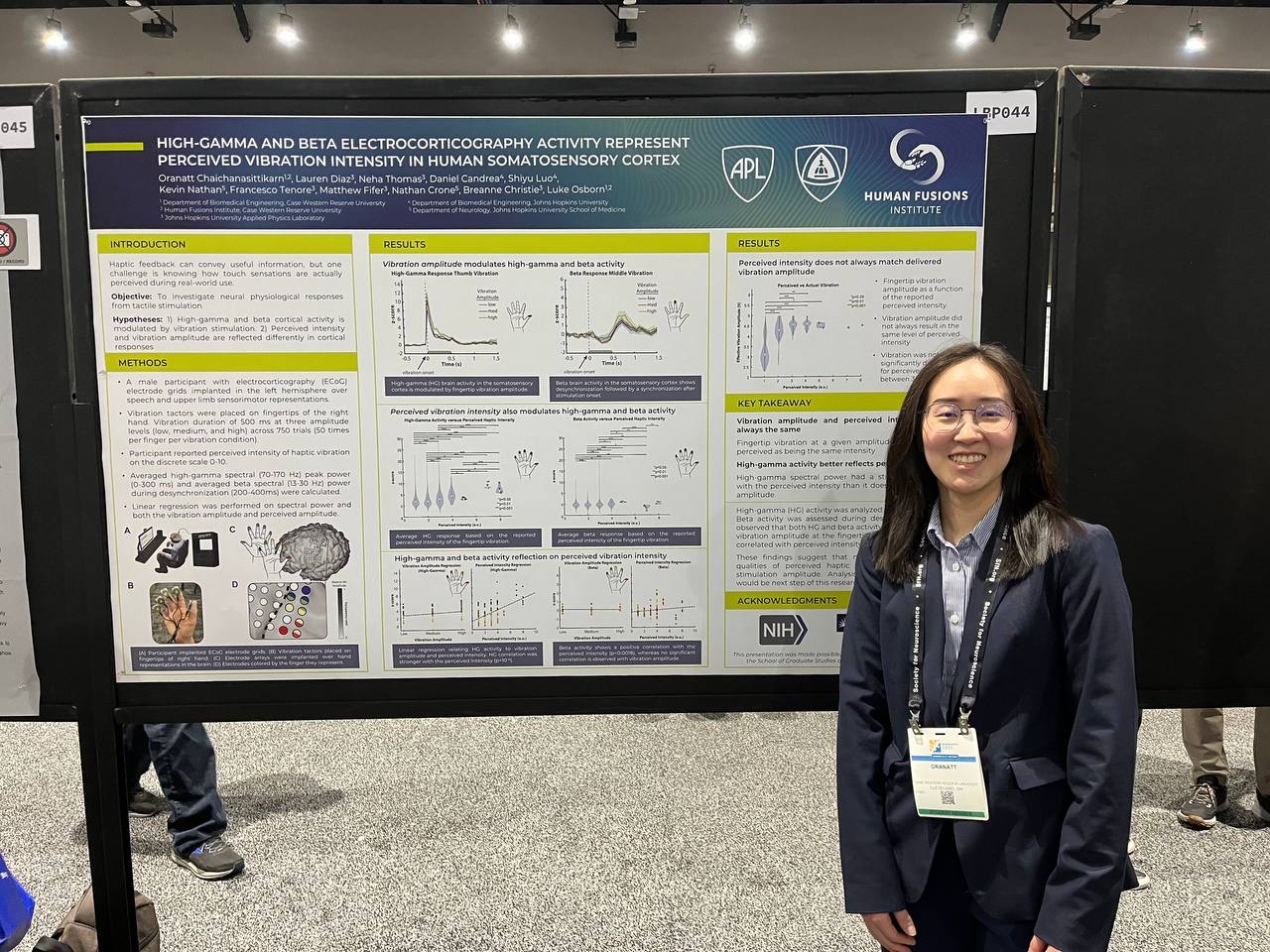
A Ph.D. student working with Assistant Professor Luke Osborn, Oranatt Chaichanasittikarn presented her poster, “High-gamma and beta electrocorticography activity represents perceived vibration intensity in human somatosensory cortex.” Her research focused on assessing the brain’s response to vibrotactile stimulation, and she analyzed neural activity, specifically electrocorticography (ECoG) signals on finger representation of the cerebral cortex, to understand how perceived vibration modulates neural activity. “I learned that neural activity can reflect qualities of perceived haptic information regardless of stimulation amplitude,” she said of her research. “High-gamma activity had the strongest reflection to perceived intensity, compared to vibration amplitude and beta activity.”
“The reception was very positive,” Chaichanasittikarn said of her presentation. “Several attendees asked insightful questions about the interpretation of the results from neuroscience, physiology, and engineering perspectives. Others were interested in the technical aspects, including the setup and how we decoded the vibrotactile information from ECoG signals.”
Laura McGann, a Ph.D. student in HFI director Dustin Tyler’s lab, analyzed user study gaze, grasp, and survey data for her poster, “The Influence of Neural Haptics on Attention, Control, and Perception in Immersive Human-in-the-Loop Interactions.” For this summer pilot study, McGann recruited fifteen human participants, each of whom performed a few hours of training and trial tasks across two sessions using an HFI immersive neural haptic human-in-the-loop interface, which gives participants direct body-motion control over a virtual robot arm and hand. Attending a large academic conference for the first time, she was happy with the reception to her poster. “Quite a few very interested people came by and asked good questions, many of which we’ve discussed in the lab, so it was encouraging to see we are thinking of things people care about.” McGann was also pleased to see recent HFI graduate Sedona Cady’s work featured in a presentation for Battelle, the company she now works for.
Roberto Peralta, a Ph.D. student in Assistant Professor Emily Graczyk’s lab, found that those who came to see his poster, “Amplitude-Modulated, High-Frequency Peripheral Nerve Stimulation Elicits Natural Sensation After Amputation and Tetraplegia,” wanted to stay in touch about results from future experiments.
Another Ph.D. student in Graczyk’s lab, Jonah Mudge spent three months conducting nerve stimulation and EMG recording experiments with two amputee participants to prepare his research poster, “Effects of Pulse Width and Pulse Frequency on Proprioceptive Joint Position and Force Sensation.” He not only enjoyed discussing his research with people who stopped by his poster, but also appreciated exposure to others’ research. “I spoke with a researcher who modeled the primary muscle spindle afferent response to gamma dynamic and gamma static intrafusal inputs. She determined that Ia muscle spindles can behave as a tunable feedback controller during perturbed locomotion, which greatly impacted my understanding of proprioceptive response profiles and could be very relevant to my research. I attended a lecture about the structure and organization of skin mechanoreceptors, which was very eye-opening.”
“I think the exposure to such multidisciplinary work was incredible,” Peralta said of the conference. “The tools and methods our fellow neuroscientists and engineers are using to push everything from cellular-level neuroscience to rehabilitation following any assortment of injury or neuropathic disease are inspiring. I came away from this conference with many new ideas and hope to collaborate with researchers and clinicians, both domestically and abroad.”
Margaux Randolph, a Ph.D. student in Tyler’s lab, also appreciated the collaborative, supportive atmosphere at the conference. “I am always reminded at conferences how lucky I am to be a part of such a driven and supportive community of students and investigators from across the world,” she said. “It was so helpful to get feedback on my research at my poster (“Micro-CT validation and acute muscle recruitment of a novel interfascicular electrode for peripheral nerve stimulation”), and to consider new dimensions of the work. This year, I also stopped at more posters that had nothing to do with my research, and it really gave me the perspective that neuroscientists and engineers are stretching the domain of what is known from every angle, and in amazing ways. After SFN, I have renewed energy to get after it in the lab, so I have something cool to report next time!”
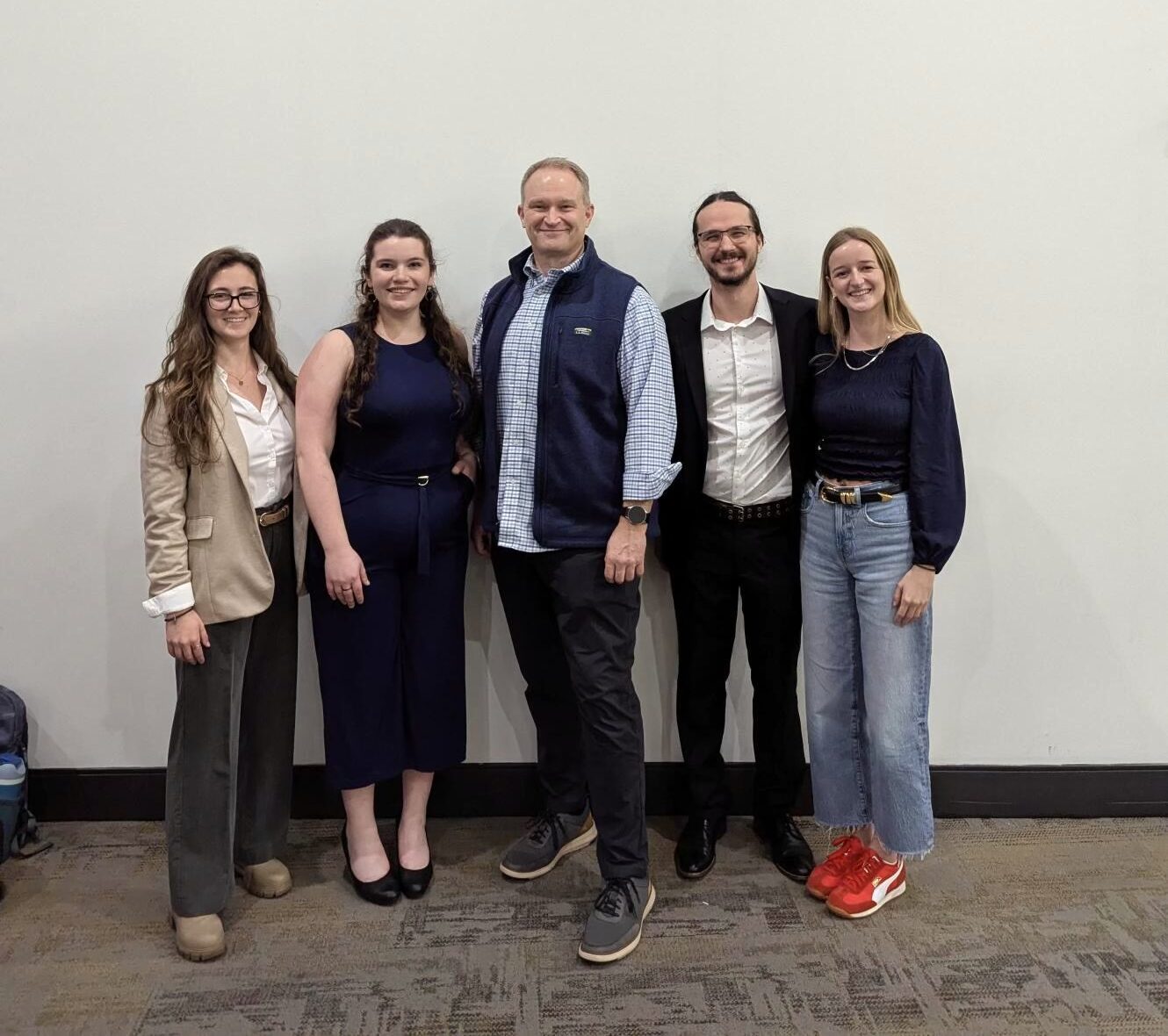
Laura McGann Presents on an International Stage
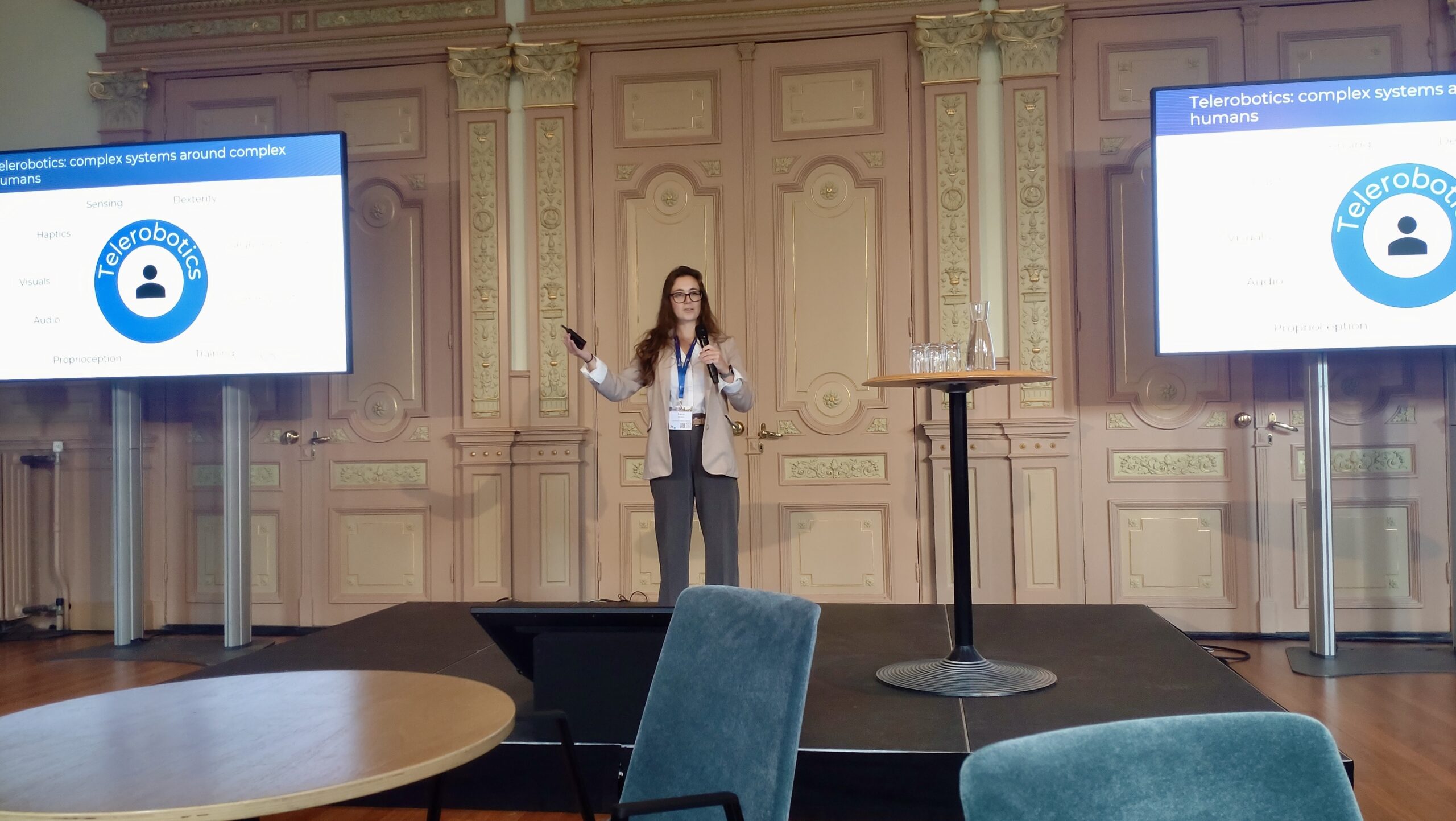
Laura McGann, a Ph.D. student in Human Fusions Institute director Dustin Tyler’s lab, recently had a paper accepted for presentation and publication for the first time in her Ph.D. career. She presented her paper, “Multimodal Analysis of Sensorimotor Learning in an Immersive, Neural Haptic Human-in-the-Loop Interface to Inform Training and Design,” at the second annual IEEE Telepresence Conference in the Netherlands. This conference is a key event for the growing community of academics, researchers, and professionals in telepresence and teleoperation, making McGann’s participation and presentation a significant opportunity. Her paper will be published in IEEE Xplore in Spring 2026, further contributing to the field.
McGann’s presentation uniquely examined the teleoperator user experience, investigating underlying sensorimotor learning via real-time behavioral measures, in addition to standard overall outcomes. As she spoke with fellow conference attendees from Europe, North America, and Asia, she was pleased with the global interest in her work. The ability of the neural haptics interface–developed by second author Rachel Jakes and presented at the inaugural conference last year–to provide haptic sensation at the fingertips without requiring any coverage of the fingertips sparked curiosity. “Only one person had really heard of targeting the underlying nerves themselves, but years ago they decided to pursue alternative haptic interfaces because their team didn’t have neural expertise,” McGann recalls. “People kept asking if I’d brought a demo because they wanted to try it.”
“It was great to meet people in the telepresence and teleoperation research areas,” said McGann, pointing out that it can be hard to meet people in these areas at more general conferences. “Latency surfaced as one of the top issues which people are trying to tackle in various ways: advancing the networks themselves, compressing video feeds in some specific manner, or trying to predict user movements and act ahead of them so the acted and viewed movements line up.” Two presentations she particularly enjoyed discussed a generic breakdown of the elements and sub-problems of telerobotics, particularly underwater applications, and the idea of deploying simple telepresence robots to the homes of older adults, demonstrating the practical applications of our research in improving the lives of people.
Since returning to Cleveland, McGann is building on her preliminary research with a full user study with human participants.
McGann’s abstract:
Human-in-the-loop (HITL) systems, such as teleoperated robots and virtual reality (VR) platforms, must be intuitive to use and efficient to learn to reduce cognitive burden and improve performance across users with varying levels of experience. Usability can be improved by interface enhancements like haptic feedback and body-kinematic-based control, which leverage natural sensorimotor pathways, as well as by tailored training regimens that help users build internal models of system abilities and limitations. However, to advance interface and training design, we need to more precisely identify which sensorimotor capabilities these approaches strengthen and which interface features continue to challenge users. Multimodal metrics and task segmentation offer a promising framework for disentangling these sensorimotor challenges.
In this study, participants performed a VR-based HITL pick-and-place task before and after a ∼1.5-hour by-parts training regimen addressing general system components, including neural haptic feedback and hand-tracking-based control. We collected overall subjective experience data and assessed performance, grasp modulation, and gaze within and across trial segments to evaluate learned competencies and persisting challenges. Results demonstrate that task segment-level analysis combined with multimodal measures can reveal maneuver-specific user difficulties and adaptation strategies, providing a powerful tool for informing user-centered interface improvements and efficient training design.

Meet HFI’s Fall 2025 Intern, Gabriela Garcia
Gabriela García is originally from Peru, where she developed an early interest in mathematics and technology. Encouraged by her grandfather, who gave her her first computer, she began exploring how it worked and later enrolled in a computer hardware course at the age of twelve. This curiosity led her to study electrical engineering for her undergraduate degree, during which she discovered biomedical engineering and became fascinated by combining electronics with applications that could improve people’s lives.
After completing her studies in Peru, García moved to Germany to pursue a Master’s degree in Electrical Engineering and Information Technology at the Karlsruhe Institute of Technology. As part of her master’s program, she wrote her thesis together with researchers at the Massachusetts Institute of Technology, focusing on ingestible electronic devices. These experiences reinforced her research interests and motivated her to pursue a Ph.D She is currently a research assistant and Ph.D. candidate at the Friedrich-Alexander-University of Erlangen-Nuremberg, specifically at the Institute for Factory Automation and Production Systems (FAPS), where she focuses on social and humanoid robotics.
García is spending the Fall 2025 semester at the SaPHaRI (Social and Physical Human-Robot Interaction) Lab at Case Western Reserve University. She was drawn to Dr. Block’s lab and the Human Fusions Institute for their focus on understanding human psychology and translating it into technology. During her time in Cleveland, she will use HFI’s new motion capture system for a SaPHaRI Lab experiment on human-human interaction and work with Dr. Block on a project exploring expressive robots. Looking ahead, she hopes to continue her academic career and eventually establish her own research group in the field of social robotics.
