SaPHaRI Lab members present research in Edinburgh
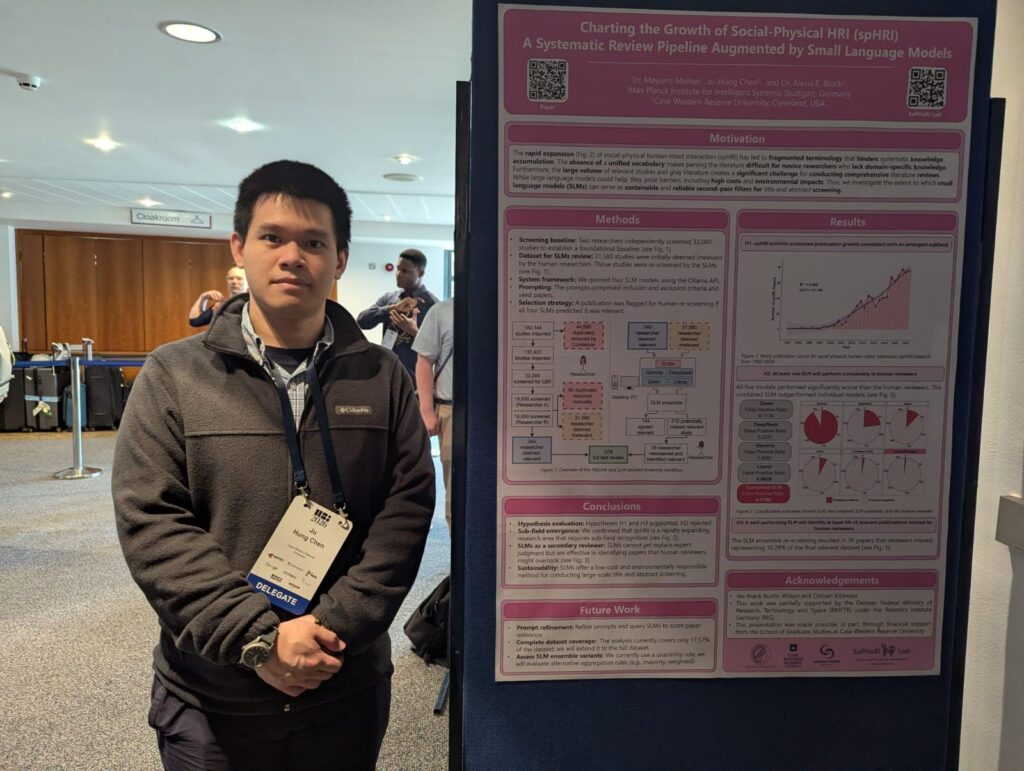
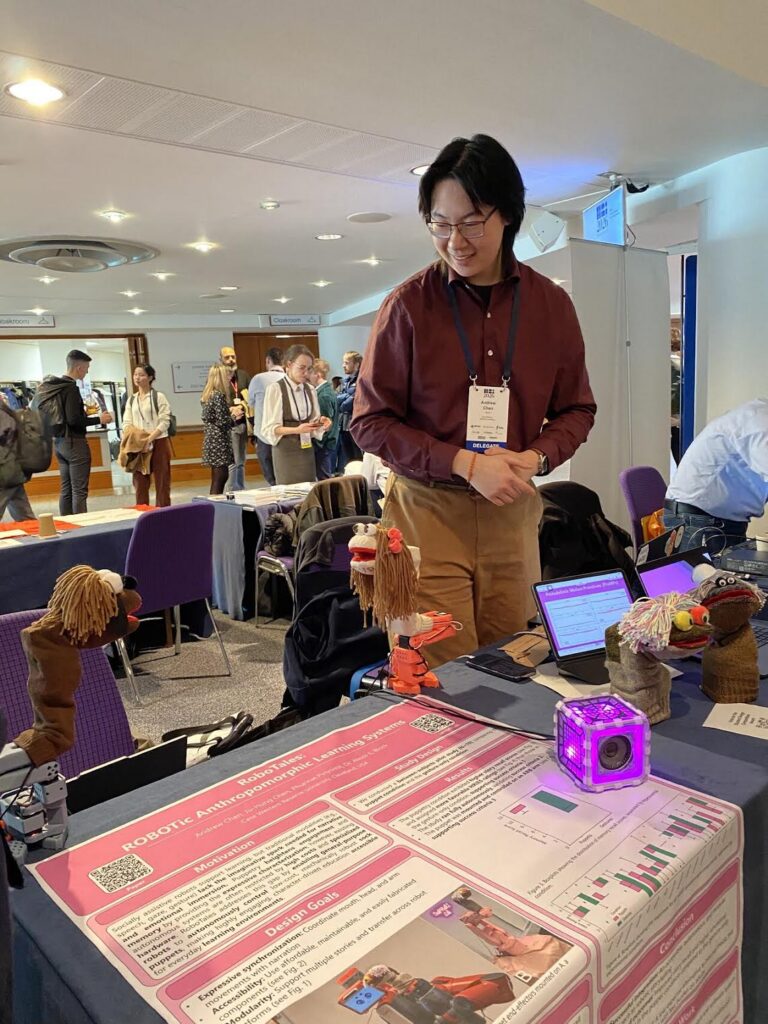
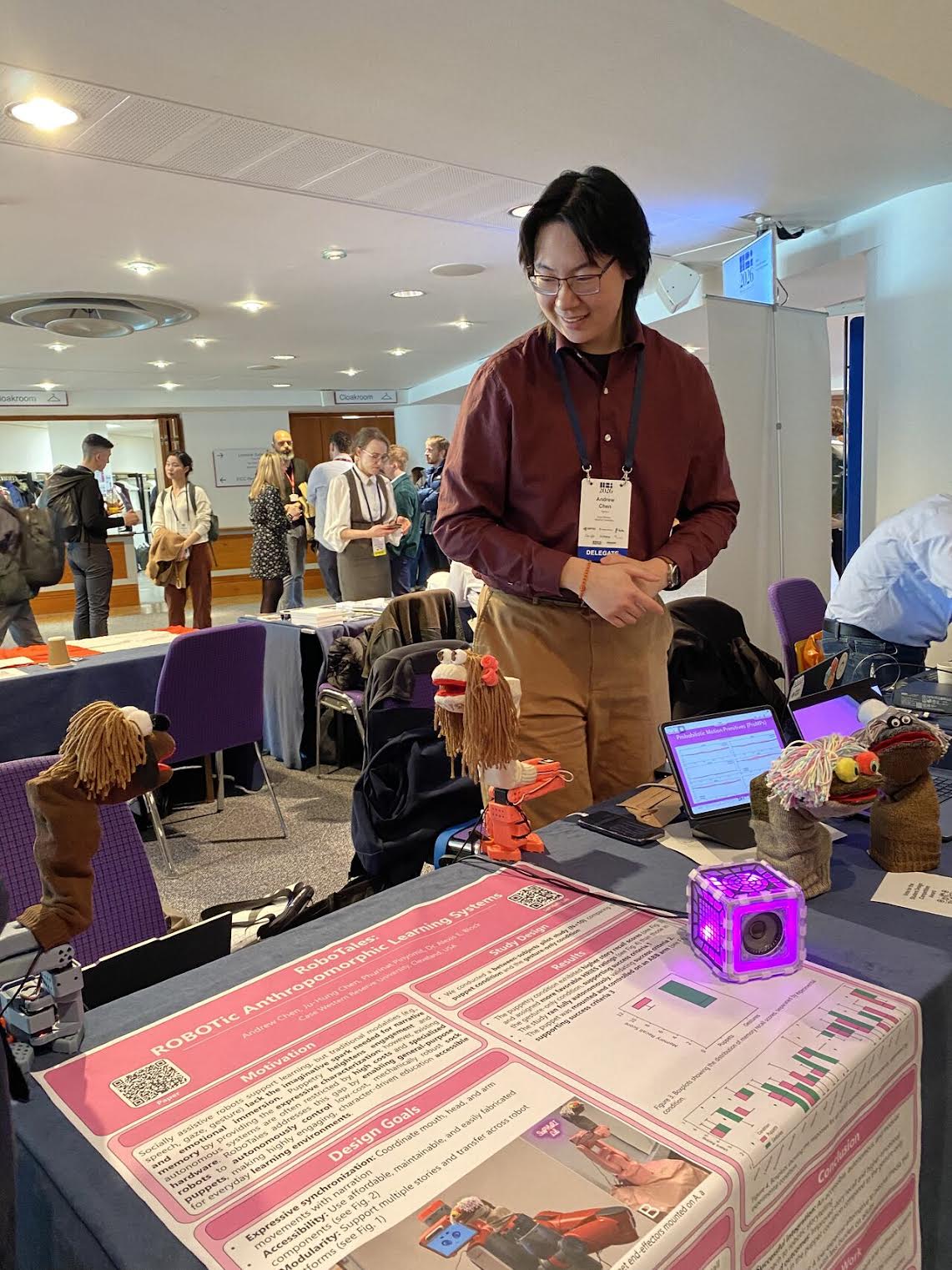
The Social and Physical Human-Robot Interaction (SaPHaRI) Lab had a strong showing at the recent ACM/IEEE International Conference on Human-Robot Interaction (HRI) in Edinburgh, Scotland. M.S. student Andrew Chen and Ph.D. students Ju-Hung Chen and Phurinat (Chester) Pinyomit presented the SaPHaRI lab’s student design challenge, RoboTales: Robotic Anthropomorphic Learning Systems. In addition, Ju-Hung Chen presented a late-breaking report titled Charting the Growth of Social-Physical HRI (spHRI): A Systematic Review Pipeline Augmented by Small Language Models. Assistant Professor Alexis E. Block also co-organized the workshop “Workshop YOUR study design 2026!”. All three papers were published in the conference’s companion proceedings.
“I am so proud of Andrew, Ju-Hung, and Chester for their work at HRI,” said Dr. Block, director of the SaPHaRI lab. “This is the leading conference in our field, and having their work accepted and presented there, especially as their first publications, is an incredible accomplishment. I heard wonderful feedback from colleagues about the live RoboTales demo, and it meant a lot to know they represented the SaPHaRI Lab and CWRU so well.”
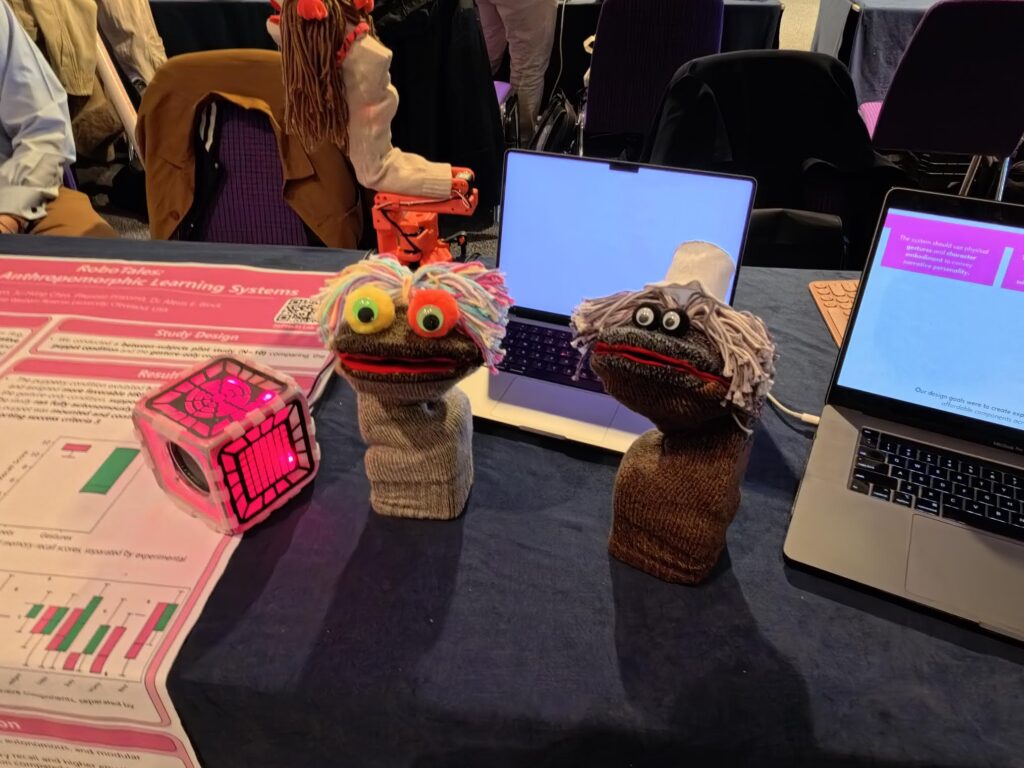
For the Student Design Challenge, the team developed expressive robotic storytellers using custom-designed sock puppets. By synchronizing robotic arm gestures and puppet mouth movements with narrated audio, they created a more engaging storytelling experience. The project attracted wide-ranging interest, from fashion researchers curious about puppet design to robotics experts focused on motion trajectories and control, as well as children attending the conference’s public sessions. “We were thrilled by the diversity of interest our project received,” said Pinyomit.
Ju-Hung Chen also presented a Late-Breaking Report exploring the use of small language models as secondary reviewers in the title and abstract screening stages of a PRISMA systematic review. By adapting multiple low-parameter models, the team identified relevant studies that had previously been misclassified as irrelevant. Attendees were particularly impressed that the work was conducted on a standard desktop computer, demonstrating an accessible pathway for researchers with limited computational resources to conduct rigorous review studies.
In addition to presenting his research, Pinyomit contributed over 20 hours as a student volunteer and was recognized with the conference’s Most Valuable Student Volunteer Award. His responsibilities included manning registration, supporting audiovisual operations, assisting with Q&A sessions, and ensuring smooth conference logistics. “Volunteering gave me a behind-the-scenes perspective on the conference and created a unique opportunity to connect with peers and organizers,” he said. “Whenever the organizers needed a volunteer to take on a sudden new task, I made sure I was there to step up and help out.”
Beyond their presentations, the students highlighted the broader impact of attending HRI. All three were visiting the United Kingdom for the first time and engaged with researchers from around the world. “It was wonderful to have so many HRI researchers of all experience levels in one place,” said Andrew Chen. “ I met amazing people and learned an enormous amount in a very short time.”