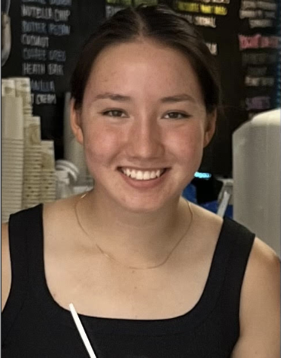
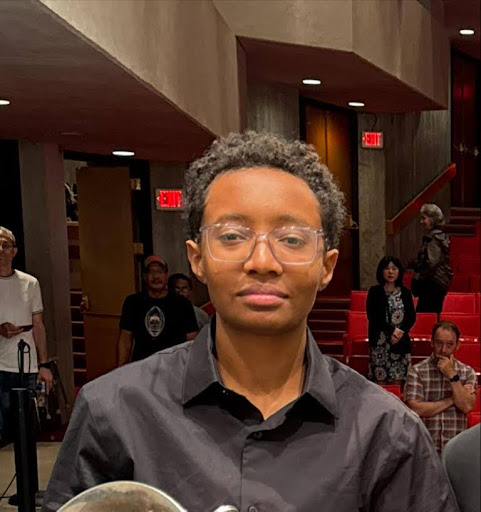
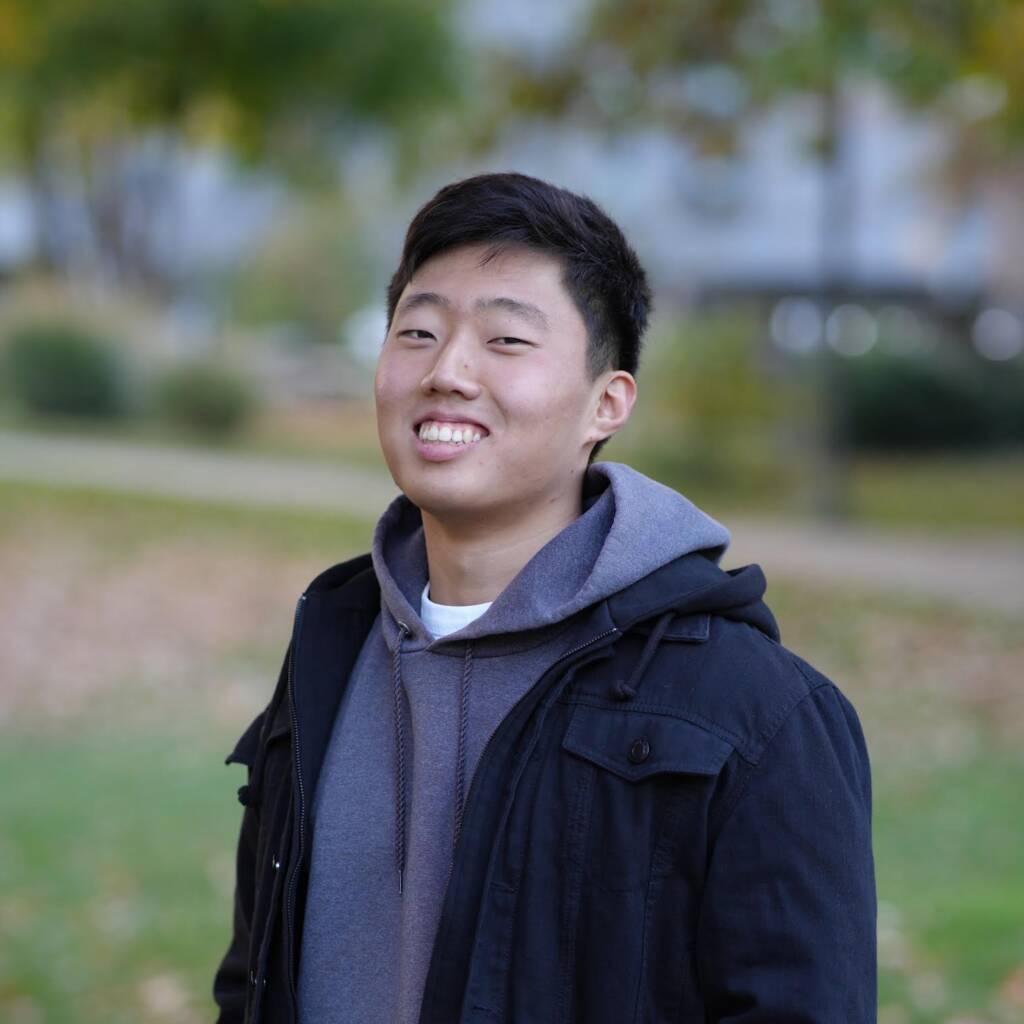
From a young age, Sophia Corey enjoyed assembling her toys and unraveling their inner workings. “I’ve always been curious about how the world around me functions,” she shared. Now a first-year student at Case Western Reserve University, she has wasted no time in seizing the research opportunities at the Human Fusions Institute.
After watching the 60 Minutes episode featuring HFI Director Dustin Tyler, Sophia Corey was immediately captivated by the idea of adding sensory input to prosthetics. Her enthusiasm led her to contact Tyler shortly after arriving on the CWRU campus. “After learning about the broader scope of research happening at HFI, I knew I wanted to be a part of it,” she said. “I’m excited to learn as much as possible and contribute to this transformative work.”
Corey is currently working with Ph.D. student Margaux Randolph, who is teaching her about computer-aided and preclinical electrode design. Randolph expressed excitement about getting Corey more involved in the lab’s research.
Leaning towards majoring in biomedical or electrical engineering, Corey is particularly interested in engineering that interacts directly with the body and involves the brain and nervous system. She is a CWRU collaborative coding club member and plans to join other engineering societies. After she finishes her undergraduate studies, she plans to start either M.D/Ph.D. or Ph.D studies.
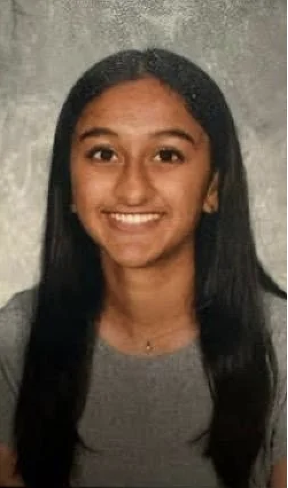
As a high school senior in Spain, Marta Ruiz Gonzalez’s interest in applied physics was sparked by a course that challenged her perspective on the subject. Initially considering a medical career, she discovered that biomedical engineering perfectly blended her original passion and her newfound interest in physics.
Driven by her passion for biomedical engineering, Ruiz Gonzalez chose to continue her academic journey at Case Western Reserve University. Now a junior, she is embarking on a semester at the Human Fusions Institute, where she will study peripheral nerves with Ph.D. student Margaux Randolph. Their collaborative work aims to enhance the testing and performance of an electrode implanting system for the nerves.
A CWRU Neuroscience Society member, Ruiz Gonzalez heard about HFI from one of her fellow club members. After meeting Randolph and hearing about their interest in neural engineering, she knew she wanted to get involved. “Neurosurgery is a very broad area in constant evolution, and biomedical engineering could potentially solve many problems and improve many procedures,” she said.
Looking ahead, Ruiz Gonzalez is eager to make her mark in the device design industry. Her ultimate goal is to collaborate with neurosurgeons, understand their specific needs, and enhance surgical procedures.
Beyond her academic pursuits, Ruiz Gonzalez is an active member of the CWRU running club. She values the opportunity to meet new people and stay fit, finding balance in her life outside the STEM arena.
When Emily Imka was a high school student at Hathaway Brown School, she went to NASA Glenn Research Center as an intern through her school’s Fellowship in Science Research & Engineering Program. “It was a way for me to explore my interest in research in a structured way with mentors,” she said. “I was an artist, but I hadn’t realized yet that there were legitimate careers in art with a connection to the sciences.”
Imka’s interest in the interaction between arts and sciences led her to pursue a career as a biomedical artist. She earned her B.F.A. in biomedical art at Cleveland Institute of Art and is now a graphic designer at the Human Fusions Institute.
At HFI, Imka will be instrumental in shaping the institute’s visual identity and creating media that effectively communicates its values and technology. This includes producing photos, figures, and illustrations for grants, designing printed materials for the physical space on campus, and creating graphics for presentations, brochures, and posters.
Before coming to HFI, Imka worked as a medical illustrator specializing in neuromodulation at Cleveland Functional Electrical Stimulation Center. She enjoyed contributing her design skills in a research environment and is eager to do the same at HFI.
“I’m excited to learn about the research directly from the people doing it and about the opportunity to showcase their work creatively,” said Imka. “I am very drawn to the team HFI has been building. I like their dedication to their projects and how they work together.”
Four high school students, including Cait Ahn of Choate Rosemary Hall in Connecticut and three local students: Olivia Bruening of Cleveland Heights High School, Austin Fritzgerald of Hawken School, and Aashvi Jagetia of Hathaway Brown School, spent the summer at the Human Fusions Institute, contributing to the institute’s mission of advancing research and innovation.
Spending the summer in Cleveland for the first time, Ahn, a San Francisco Bay Area native, created parts using Onshape, 3D-printed them in think[box] and made iterations. She designed a wrist mount to attach different hand and arm models and a sensor mount to increase user sensation. Ahn also printed things for others’ projects and is proud of her mastery of Onshape, the development of usable products, and the significant growth and independence she achieved in the design process.
As Ahn prepares to start her senior year of high school, she is eager to apply her new skills to her final season on her robotics team, demonstrating the real-world impact of her summer experience. This experience has not only enhanced her technical skills but also instilled in her a sense of innovation and a desire to apply her knowledge to real-world problems.
Jagetia’s enthusiasm for her work was evident as she described her experience. She primarily worked with McGann and Jakes, mapping joint angles relevant to hand movements used in tasks to the joints of robotic grippers. Using the lab’s Oculus headset, she used hand tracking to find joint angles through testing before analyzing the data using Python. “I thought working with the Oculus headset was so cool because I’ve never really used anything like it,” she said. “It was exciting to have the chance to use it and play around with it a bit.” On a typical day, she used the headset to test, made edits to the code, and ran the Unity program to check for errors and troubleshoot to correct any errors. She was fascinated by the programming language and all the software she learned to use, including C#, Python, and ROS2.
“I really enjoyed working in this field, and I think it’s definitely something I could see myself pursuing in the future,” said Jagetia, who enjoyed the freedom that came with her internship. She looks forward to continuing to research at HFI during the school year throughout her junior and senior years and using her new skills to build robots for her school’s robotics team.
Fitzgerald primarily worked with CWRU Ph.D. student Roberto Peralta. He performed a risk analysis on the Saturn II stimulator, testing each waveform at different pulse widths and amplitudes and tracking their accuracy. After reviewing standards and noting out-of-standard points, he plotted microseconds of each pulse width value. Amid his analysis, he identified a high-density connect and put it in a printed circuit board design so that all 26 channels of the Saturn II could be used at their full potential.
When Fritzgerald began his internship at the beginning of the summer, his coding knowledge was limited. He quickly learned to use MATLAB to plot, identify patterns, and memorize commands. “It was extremely rewarding to see my code turn into a plot right before my eyes.” His rapid growth and learning over the summer testify to his dedication and hard work.
Fritzgerald looks forward to starting his senior year by presenting his work over the summer at his school’s science fair. “The work at HFI is fascinating,” said Fritzgerald, who enjoyed learning about other projects in the lab, especially virtual reality. “I am very proud to be involved in such amazing work as a high school student. My academic journey is just beginning, and I will forever be grateful for the opportunity to have an experience like this.”
Mentored by Ph.D. student Margaux Randolph, Bruening came to HFI as part of CWRU’s Research Immersion in Brain, Spinal Cord, & Peripheral Nerves program for high school students. Her main project was working in a dry lab to compare two doctors’ observations on fascicular anatomy in peripheral nerves. One believed that the fascicles merged and diverged randomly and not in groups, while the other thought they merged in groups. Bruening believed one doctor was more accurate in the sporadic convergence, whereas the other only looked distally at the body.
Having spent her days at HFI segmenting the nerve micro CTs and analyzing different slides, Bruening was “intrigued in seeing how the fascicles merged and diverged within the nerve.” She was also proud of herself for learning how to use new software.
When the new school year starts, Bruening looks forward to thanking her science teacher, who encouraged her to pursue the internship, and encouraging other students to get involved in Summer 2025. “I think the biomedical engineering field is awesome,” she said. “If it weren’t for this program, I never would’ve known how interested in biomedical engineering I would be.”
As an undergraduate student at Calcutta Institute of Engineering and Management, Rohit Bose was deeply inspired by Hugh Herr’s TED Talk on the ability of prosthetic leg recipients to walk and dance again. His fascination with the field was not just a passing interest, but a profound passion that would shape his future.
Now, Bose is the newest postdoc at the Human Fusions Institute. Fresh from his Ph.D. studies at the University of Pittsburgh, he is ready to dive into his main focus at HFI: developing innovative invasive and noninvasive technologies to deliver meaningful sensory feedback. His enthusiasm is palpable as he looks forward to rehabilitating differently-abled populations and augmenting the performance of healthy individuals.
Bose was drawn to the collaborative nature of HFI, recognizing the value of different perspectives. “There are so many passionate and talented individuals working towards one vision of humanizing technology to improve quality of life,” he said. “Today, where most disciplines work separately towards the same goal, HFI aims to merge them and provide an interdisciplinary framework. I am looking forward to learning new perspectives from different disciplines.”
While Bose is new to Case Western Reserve University and Cleveland, his experience in the prosthetics field is far-reaching. As a Ph.D. student in Pittsburgh, he worked on restoring sensation in lower-limb amputees using spinal cord stimulation, achieving the first evidence of restoring missing sensation in individuals with peripheral neuropathy. Before his time in the United States, he was a research assistant at the Singapore Institute of Neurotechnology, where he decoded brain responses to different fragrances and used sensory feedback using targeted TENS in upper-limb amputees. His work has been recognized by publishing twenty-one journal articles and four book chapters.
Outside the laboratory, Bose’s interests are as diverse as his professional pursuits. He enjoys cooking, savoring good food, recreational running, board games, and watching movies.
Morgan Creighton, an undergraduate research assistant in the Rehabilitation and Applied Movement Performance Lab at Emory University, spent the summer at Case Western Reserve University as a Wen H. Ko intern. After a summer working with Ph.D. students in Human Fusions Institute Director Dustin Tyler’s lab, she received a second-place award for her poster presentation in the VA’s Advanced Platform Research Center Summer Internship Program Research Symposium.
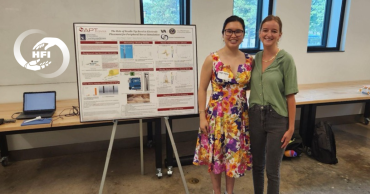
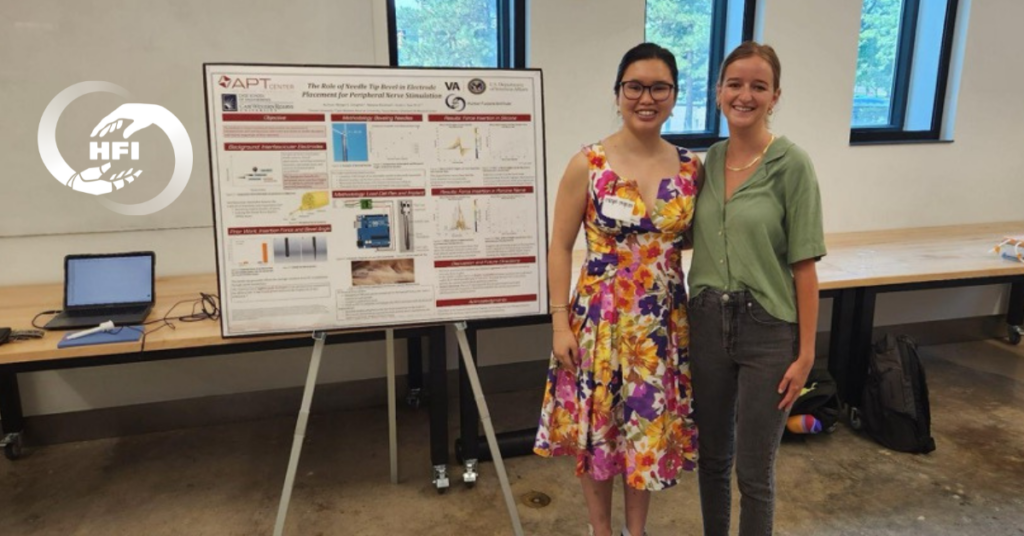
Morgan Creighton (left) poses with mentor Margaux Randolph by her poster at the Advanced Platform Research Center Summer Internship Program Research Symposium.
Throughout the summer, Creighton focused her research on the role of needle tip bevel in electrode placement for peripheral nerve stimulation. Her specific goal was to establish a clinical benchmark to predict the type of electrodes (intrafascicular and interfascicular) based on the needle’s sharpness and the force required for insertion. She created prototypes using computer-aided design software, combining ideation, prototyping, and implementation to develop different designs. “It was great to go through the entire process of creating an idea from scratch,” said Creighton, fascinated by what she learned about engineering principles through ideation, creation, and implementation. “I love neural engineering, and this internship confirmed that I want to further research neural engineering and bioelectronic interfacing.”
Ph.D. student Margaux Randolph, Creighton’s primary summer mentor, was proud of her mentee’s tenacity when learning new skills. “On her very first day, she downloaded Matlab and Fusion 360 for the first time, and by her last day, she had a working prototype with analyzed data,” said Randolph. “Working with her and watching her excel has been really fun.
As Creighton learned new skills this summer, she was also proud of herself for persevering through challenges and becoming an independent troubleshooter. As she transitioned through each project phase, she became more independent and self-assured in her actions. “I am very thankful for this internship, which has helped me become a better researcher and person,” said Creighton. I have learned more than what a class can teach me.” She looks forward to taking her new skills to Emory in the fall.
Two Cleveland area rising seniors, Olivia Bruening from Cleveland Heights High School and Austin Fritzgerald from Hawken School, are spending their summer conducting research at the Human Fusions Institute.
Bruening, who has previously taken anatomy classes at her high school, is now immersing herself in research at the HFI Director Dustin Tyler’s lab as part of Case Western Reserve University’s Research Immersion in Brain, Spinal Cord (RIBS), & Peripheral Nerves program for high school students.
Bruening’s passion for the medical field has always been a driving force. Her work with Ph.D. student Margaux Randolph in Tyler’s lab, where she segments micro CTs of implanted peripheral nerves, has been a source of immense pride. She is particularly excited about creating a poster and research paper to showcase her learnings at CWRU.
“While I have always been interested in STEM, I never realized how important and interesting engineering could be until now,” said Bruening, whose interest in biomedical engineering has grown since she started her internship at CWRU. “I am quite excited to gain new knowledge and see how my work might make a long-term difference. Having first-hand work experience will help give me great perspective and good job ideas.”
Fritzgerald’s interest in biomedical, electrical, and materials engineering took off after he attended ASM International’s Eisenman Materials Camp with other high school students worldwide. He worked with students from France, Taiwan, and India to perform a failure analysis on five broken sockets. “Getting familiar with processes such as scanning electron microscopy and heat treatment wasn’t easy, but seeing my team’s work identify the cause of failure at the end of the week was very rewarding,” he said.
After watching a YouTube video, Fritzgerald was captivated by HFI’s work with prosthetic limbs. As part of Hawken’s Scientific Research Program, he is eager to learn about crucial technical processes and critical thinking skills for successful research. “I have always loved learning, and there is no better way to learn about something than to work with it firsthand,” he said. “The technology behind prosthetics fascinates me, and I am eager to learn more about its new advancements. The sense of touch is something most people take for granted, so the opportunity to work towards restoring touch in those impacted by amputation was one I could not pass up.”
At CWRU, Fritzgerald will use new Saturn II technology in prosthetic limbs to allow more advanced electrical stimulation. He primarily works with Ph.D. student Roberto Peralta of Assistant Professor Emily Graczyk’s lab.
When Fritzgerald is not in the lab, he enjoys kayaking, listening to music, and watching sports, especially basketball, football, baseball, and soccer. He is looking forward to the 2024 Summer Olympics.
Growing up, Luke Osborn enjoyed building things “for fun” and was particularly interested in his math and physics classes in high school. In the back of his mind, he was “always interested in the medical field and in helping people.”
Those passions led him to pursue an undergraduate degree in mechanical engineering. Toward the end of his undergraduate career, he became interested in creating technologies that connect with humans, particularly robotic devices and their interactions with humans. Those interests led him to pursue graduate studies in biomedical engineering, where he hoped to create technologies that could improve human functions.
Now, Osborn is the newest full-time Human Fusions Institute faculty member in Case Western Reserve University’s Department of Biomedical Engineering. He comes to CWRU from the Johns Hopkins University Applied Physics Laboratory, where, after graduating with a degree in biomedical engineering, he was a postdoctoral researcher from 2019 to 2021 and a senior neuroengineer researcher engineer from 2021 to 2024.
Osborn decided to enter academic research because “the environment supports deep scientific explorations that let us discover and create possibilities that we don’t even know exist yet.” Currently recruiting students for his research group, which will focus on creating new technologies to understand and enhance human function and performance, he looks forward to training the next generation of scientists and engineers while working closely with “all kinds of people from different backgrounds.” He hopes that his group will be able to enable“better and smarter human functionality through robots and neuroengineered technologies.”
While exploring ways to further the impact of his research, Osborn was drawn to CWRU because of the university’s strengths in neural engineering, particularly HFI’s research mission for enhancing human capabilities through human-machine interactions. “I love that we can operate a robot that’s a thousand miles away or be immersed in an augmented environment to complete a complex task,” said Osborn. “We have a great opportunity (at HFI) to understand better how humans work when interacting with new technologies.”
In addition to his research, Osborn plans to teach instrumentation classes at CWRU.
Looking back on his research career so far, Osborn is most proud of being able to build bioinspired tactile sensors for robotic hands that help the robot understand more about its environment. Using flexible materials to create artificial skins on robots, Osborn’s sensors helped measure more complex object properties when grasping with a prosthetic hand while sending touch sensations back to the user through noninvasive nerve stimulation.
Another recent highlight of Osborn’s career has been delivering complex touch sensations – such as temperature and pressure in the hands – to humans by activating different parts of the human nervous system, specifically through noninvasive peripheral nerve and direct brain stimulation. “Delivering new and useful sensory signals gives humans the ability to accomplish more and perform tasks better,” he said. As a researcher at Johns Hopkins University, he worked on these projects with various students, faculty, and other research staff. He pointed out that by better understanding the human sensorimotor system, we can more effectively create new technologies that restore and enable human capabilities.
“I am looking forward to working with great people (at CWRU) and exploring big ideas in a collaborative way that lets us address tough, emerging challenges through human-centered research and design,” said Osborn.
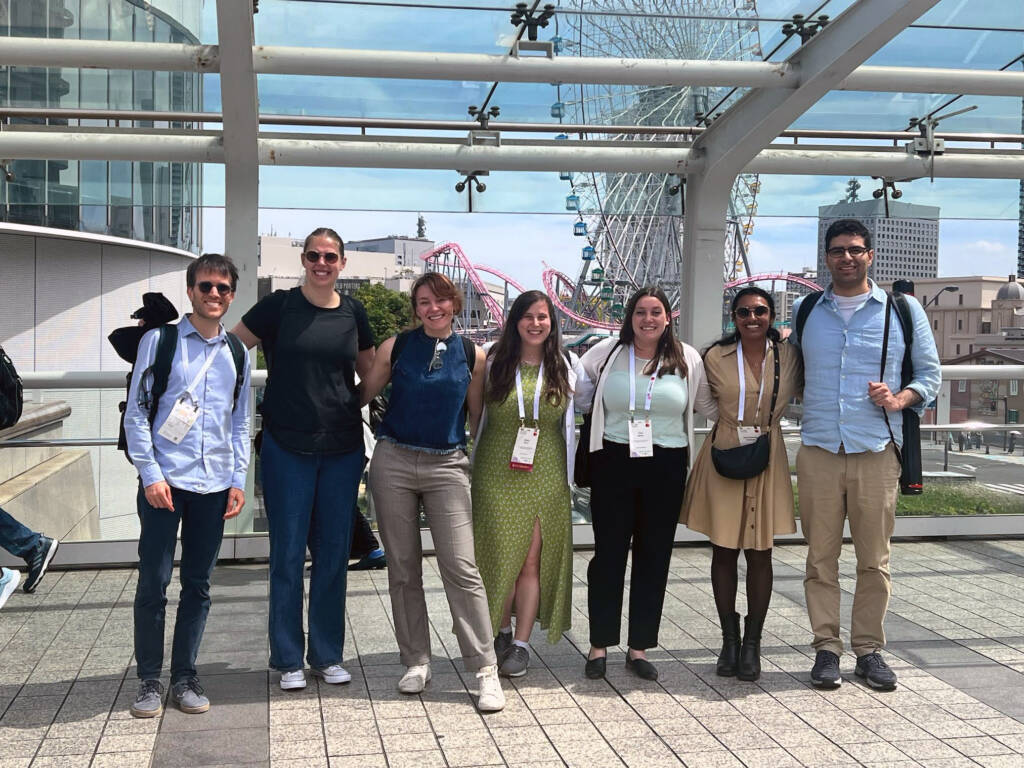
Assistant Professor Alexis E. Block recently had the honor of showcasing her groundbreaking research internationally. She participated in three workshops at the annual International Conference on Robotics and Automation (ICRA), held this year in Yokohama, Japan. She gave two invited talks and lent her expertise in human-robot interaction as a judge at one of ICRA’s competitions.
On the first and last day of the conference, she gave her invited talks in two different workshops. Using her doctoral work on HuggieBot as a foundation, she presented “Design Guidelines for Effective Social-Physical Human-Robot Interaction” as part of the “Towards Collaborative Partners: Design, Shared Control, and Robot Learning for Physical Human-Robot Interaction” workshop on the first day. She presented “The HuggieBot Chronicles: Lessons Learned from Designing an Interactive Hugging Robot” as part of the “Unconventional Robots: Universal Lessons for Designing Unique Systems” workshop on the last day. In addition to giving her research presentations, Block served on a panel for each workshop, engaging in thought-provoking discussions with top-notch researchers in the field.
As a judge at ICRA’s “NeuroDesign in HRI – the making of engaging HRI technology your brain can’t resist” competition, Block played a crucial role in evaluating and scoring each team’s presentation. “The submissions were interesting because they all took a unique approach to the topic prompt,” said Block, who appreciated the interdisciplinary nature of the competition.
ICRA drew more than 5,000 attendees from around the world. Block had the opportunity to meet researchers she has cited and been cited by for the first time, reconnect with old friends from her doctoral and postdoctoral research labs, meet up with people she has met at past conferences, and make new connections in her field.
Block thanked Case Western Reserve University’s Flora Stone Mather Center for Women for giving her a small grant to support her attendance at ICRA.
When he was young, Noah Medrano’s curiosity led him to take apart his laptop for fun and analyze its components. “I began to teach myself what programming is, and I was amazed by its applications and impact on our modern world,” he said.
Medrano’s unwavering passion for technology propelled him to pursue a computer science degree at Case Western Reserve University. However, his intellectual curiosity and desire for a holistic education led him to double-major in philosophy. Now, as a Mandel Undergraduate Fellow, he is weaving together the threads of computer science and philosophy in a unique tapestry of interdisciplinary learning.
The Mandel Undergraduate Fellowship program bridges the gap between STEM and humanities, fostering a rich environment for interdisciplinary exploration. As a fellow, Medrano was awarded $4500 in funding for Summer 2024, with an additional $9000 for each of the following three years. This generous support has paved the way for his research, education abroad, and community engagement.
When considering where to invest his 2024 funding, Medrano contacted Assistant Professor Alexis E. Block. Block’s collaborative lab fosters a unique human-robot interaction, engineering, and social psychology blend. “I’m already having a great time in the lab with Dr. Block, which is possible because of the fellowship,” he said. “I was so drawn to her work in robotics and how it was incorporated into the world of social psychology through hugs and social touch.”
“The field of robotics is extremely interesting and has so many applications,” added Medrano. “I think it pairs well with philosophy in exploring the effects of implementing robotics into daily life and how humans interact with these new systems.”
Medrano’s research in Block’s SaPHaRI Lab currently focuses on her Affect-Sensing Wearable, specifically exploring its potential applications for individuals with Autism Spectrum Disorder and Post Traumatic Stress Disorder. Block says, “I have really enjoyed the creativity and ingenuity Noah brings to this project. It’s been a pleasure working with him thus far, and I look forward to continuing our work with the support of the Mandel Fellowship.” He will use an interdisciplinary approach to study the wearable’s impact on diverse communities, considering both STEM and humanities perspectives. “I am keen to contribute to this discourse and leverage this fellowship as an opportunity to expand my understanding and contribute meaningfully to this critical dialogue,” he said.
Though this is Medrano’s first summer at the Human Fusions Institute, it is his second at CWRU. He got a head start on his college career in the Summer of 2023 by enrolling in CWRU’s Emerging Scholars program, where he took courses and learned about strategies for college success. “[The program] was a very impactful experience and truly motivated me,” he said. While he is involved in multiple research activities and clubs at CWRU and is considering studying abroad or participating in a co-op, he emphasized the importance of self-care. “Although I’ve worked hard to get where I am, I took breaks and rested along the way.”
Kaleb Kim is interested in software engineering, robotics, cybersecurity, electronics, and math. His passion for computer science began when he built small games using JavaScript and Processing.js as a youth. He went on to use other software languages to develop small applications, and now he works to use software and technology to solve larger-scale problems.
For most of his first year at Case Western Reserve University, Kim was part of an Edtech startup. “It exposed me to the ups and downs of tech startup culture,” he calls. “From navigating an escalating market, producing a new product, and handling all sorts of conflict, it was an invaluable experience. While it was difficult, it provided insights into problem-solving.”
Now, as an incoming ThinkEnergy Fellow in CWRU’s Great Lakes Energy Institute (GLEI), Kim is poised to embark on a new entrepreneurial journey in the energy industry. He hopes to co-develop a startup that offers innovative electrical, software, or hardware solutions for renewable energy or energy conservation. As he prepares to commence his fellowship in Fall 2024, he eagerly anticipates collaborating with the GLEI staff and a diverse group of undergraduate and graduate students, each with unique interests spanning from battery research to entrepreneurship. “I’m particularly thrilled about the prospect of working together, learning, growing, and collectively achieving something remarkable in the field of energy,” he shared.
A recent CWRU graduate and former fellow, Adam Goodman, encouraged Kim to apply for the 2024-25 fellowship. “Since I was interested in intersecting problem solving, digital technology, and climate change, it was a no-brainer for me to apply,” said Kim. The application process consisted of a written application and a subsequent interview. The fellowship, which includes a $2000 scholarship for undergraduate fellows, is part startup incubator and part research accelerator, pairing students with faculty, companies, and investors.
In addition to his GLEI fellowship, Kim is working on a research project using theTurtleBots in Assistant Professor Alexis E. Block’s SaPHaRI lab. He began working with Block after meeting another one of Block’s students, Ishika Kanakath, at HackCWRU. About Kim, Block says, “I am very proud of Kaleb for being selected for the GLEI ThinkEnergy Fellowship. He has been a phenomenal attribute to the SaPHaRI Lab, and I know he will do stellar work in this program. I’m excited to see what he comes up with.”
When Xufei Wang was growing up in Shandong, China, he enjoyed “disassembling everything I could get, checking what was inside, and failing to assemble it back together.”
His childhood interests led him to pursue an engineering career. After earning a B.S. in Internet of Things at Huazhong University of Science and Technology, he came to Case Western Reserve University to pursue a Ph.D. in Computer Engineering. Recently, he defended his Ph.D. thesis, “Time Serials Data Processing with Neural Networks: From Classification to Decision Making.”
While preparing his thesis, Wang researched the efficacy of neural networks in processing time series data, mainly through the lens of Human Activity Recognition (HAR) and Congestion Control (CC). His study was anchored in the detailed exploration of fundamental neural architectures, including Convolutional Neural Networks (CNNs), Recurrent Neural Networks (RNNs), and advanced reinforcement learning techniques underpinning the subsequent application-specific innovations.
Wang decided to come to CWRU after hearing about Associate Professor Pan Li’s research in the fields of network science and economics, energy systems, security and privacy, and big data, such as machine learning, large-scale data analytics and computing, healthcare, and social networks. Looking back on his time as a Ph.D. student, he is most proud of having papers accepted for publication and feeling that publications had acknowledged his research.
After Wang graduates, he plans to start a career in industry. “I would like to catch the state-of-the-art technology, understand and recreate it, and bring my ideas to the real world,” he said.